
Table of Contents
ToggleHello Kitty decor isn’t just for kids anymore. The iconic Sanrio character has evolved from a childhood staple into a legitimate design theme that works for teens, young adults, and nostalgic millennials who grew up with the brand. Whether someone’s creating a themed room for a child or adding playful accents to their own space, Hello Kitty bedroom decor offers surprising versatility. With the right balance of color, pattern, and restraint, it’s entirely possible to create a room that feels fun and personality-driven without looking like a toy store exploded.
Key Takeaways
- Hello Kitty bedroom decor works across all ages by balancing the iconic character’s minimalist design with intentional color choices and restraint to avoid an overly juvenile look.
- Select quality bedding with 200-300 thread count and machine-washable fabrics, paired with coordinating textiles like throw pillows, curtains, and area rugs to establish a cohesive theme foundation.
- Renter-friendly wall treatments such as vinyl decals, removable wallpaper, and framed prints offer instant visual impact without permanent damage, with options ranging from subtle accents to full-wall coverage.
- DIY projects like painted furniture, custom headboards, fabric-covered storage bins, and floating shelves let you personalize your Hello Kitty bedroom decor while keeping costs manageable.
- Mix themed pieces with neutral furniture, natural textures, and quality materials to create a sophisticated, balanced space that feels intentional rather than cluttered with merchandise.
Why Hello Kitty Decor Works for All Ages
The staying power of Hello Kitty comes down to its simple, adaptable design. Unlike character themes that rely on complex storylines or specific color palettes, Hello Kitty’s minimalist silhouette translates easily across different aesthetics. The signature bow, whiskers, and round face work in bold primary colors for younger kids, pastels for a softer look, or even monochrome black-and-white for a more sophisticated approach.
From a design standpoint, Hello Kitty functions as both a focal point and an accent. A single statement piece, like a headboard decal or a large canvas print, can anchor the theme without overwhelming the room. Alternatively, subtle touches like drawer pulls, lampshades, or throw pillows let the character peek through in a more understated way.
The theme also scales well with different room sizes and budgets. A small bedroom can handle a few carefully chosen pieces, while a larger space can accommodate bolder applications like wallpaper or murals. Many DIY decor tutorials demonstrate how accessible character-themed projects can be with basic crafting skills and materials from home improvement stores.
Age-appropriateness matters, though. For a child’s room, durability is key, look for washable fabrics, scrubbable wall finishes, and decor that can take some wear. For teens or adults, the focus shifts to quality over quantity, with an emphasis on pieces that feel intentional rather than haphazard.
Essential Hello Kitty Bedroom Elements to Get Started
Bedding and Textiles
Bedding sets the foundation for any themed bedroom. Hello Kitty comforters, duvet covers, and sheet sets come in a wide range of styles, from all-over character prints to more subtle designs with small embroidered details or border patterns.
When selecting bedding, pay attention to thread count and fabric composition. A 200-300 thread count cotton or microfiber blend offers a good balance of softness and durability for everyday use. For kids’ rooms, consider machine-washable materials that can handle frequent laundering without fading.
Beyond the bed, textiles extend the theme throughout the room. Throw pillows in coordinating colors (pink, red, white, black) add dimension without requiring a full bedding swap. Look for pillows with removable, washable covers, typically with a hidden zipper closure along one seam.
Curtains or blackout shades with Hello Kitty accents control light while reinforcing the theme. Standard curtain panels measure 84 inches or 96 inches in length for most residential ceilings (8-9 feet). Blackout fabric is especially useful for kids’ rooms, blocking early morning light and helping maintain consistent sleep schedules.
A coordinating area rug (typically 5×7 feet or 8×10 feet, depending on room size) defines the space and adds a soft surface underfoot. Rugs with a low pile height (under 0.5 inches) are easier to vacuum and less likely to trip younger kids.
Wall Art and Decals
Wall treatments create instant visual impact without major construction. Vinyl wall decals are the most renter-friendly option, they adhere to painted drywall, remove cleanly, and won’t damage most paint finishes. Apply decals to smooth, clean walls for best adhesion. Textured surfaces like orange peel or knockdown drywall may not hold decals as securely.
For a more permanent solution, consider framed prints or canvas art. Standard frame sizes (8×10, 11×14, 16×20 inches) are widely available and affordable. Hang frames at eye level, generally 57-60 inches from the floor to the center of the artwork. Use drywall anchors rated for the frame’s weight if studs aren’t conveniently located.
Removable wallpaper or peel-and-stick panels offer full-wall coverage with less commitment than traditional wallpaper. Most products apply directly over painted drywall and remove without residue. One roll typically covers 20-30 square feet, so measure wall dimensions carefully before ordering. For an 8-foot ceiling with a 10-foot wall, expect to need about 80 square feet of material.
Another approach is a DIY painted accent wall featuring a large-scale Hello Kitty silhouette or bow motif. Use a projector to trace the design onto the wall, then fill in with latex paint in a satin or eggshell finish. Satin finishes are easier to wipe clean than flat paint, which matters in kids’ spaces.
DIY Hello Kitty Decor Projects for Your Bedroom
Custom decor projects let homeowners personalize the theme while keeping costs down. These projects assume basic DIY skills and commonly available tools.
Painted Furniture Accents: Transform a plain dresser or nightstand with Hello Kitty-themed paint details. Start with a thorough cleaning using TSP (trisodium phosphate) to remove grease and grime. Lightly sand the surface with 120-grit sandpaper to help primer adhere. Apply a coat of bonding primer designed for furniture, then two coats of latex paint in the base color. Once dry, use a stencil or freehand the Hello Kitty face and bow in contrasting colors. Finish with a clear polyurethane topcoat (water-based for easier cleanup) to protect the design.
Custom Headboard: Build a simple upholstered headboard with Hello Kitty fabric. Cut a piece of 3/4-inch plywood to the desired width (typically matching the mattress width) and height (24-36 inches is standard). Wrap the plywood with 2-inch foam padding, securing it with spray adhesive. Stretch Hello Kitty fabric over the foam, pulling it taut and stapling it to the back of the plywood with a heavy-duty staple gun. Mount the finished headboard to the wall using French cleats or Z-clips for a secure, floating appearance. This approach distributes weight across a wider area than standard picture hangers.
Fabric-Covered Storage Bins: Upgrade plain storage cubes or bins with coordinating fabric. Measure the bin’s exterior panels, add 1 inch to each dimension for seam allowance, and cut fabric panels. Use fabric glue or a hot glue gun to attach panels to the bin’s exterior, folding and gluing edges for a clean finish. This works particularly well with cube organizers commonly found at home stores.
Light Switch and Outlet Covers: Swap standard white covers for custom-painted or decoupaged versions. Remove existing covers (turn off power at the breaker first), clean them, and apply a base coat of acrylic paint. Once dry, add Hello Kitty motifs using stencils, decals, or cut-out images sealed with Mod Podge or clear acrylic sealer. This is a small detail that adds cohesion without major effort.
Floating Shelves with Character Accents: Install simple floating shelves (¾-inch thick MDF or solid wood, 6-10 inches deep) to display Hello Kitty figurines, books, or decorative items. Locate wall studs with a stud finder and secure shelf brackets directly into studs for maximum support. If studs aren’t positioned where shelves are needed, use toggle bolts rated for the expected load (typically 20-30 pounds per bolt in ½-inch drywall).
Styling Tips to Balance Cuteness With Sophistication
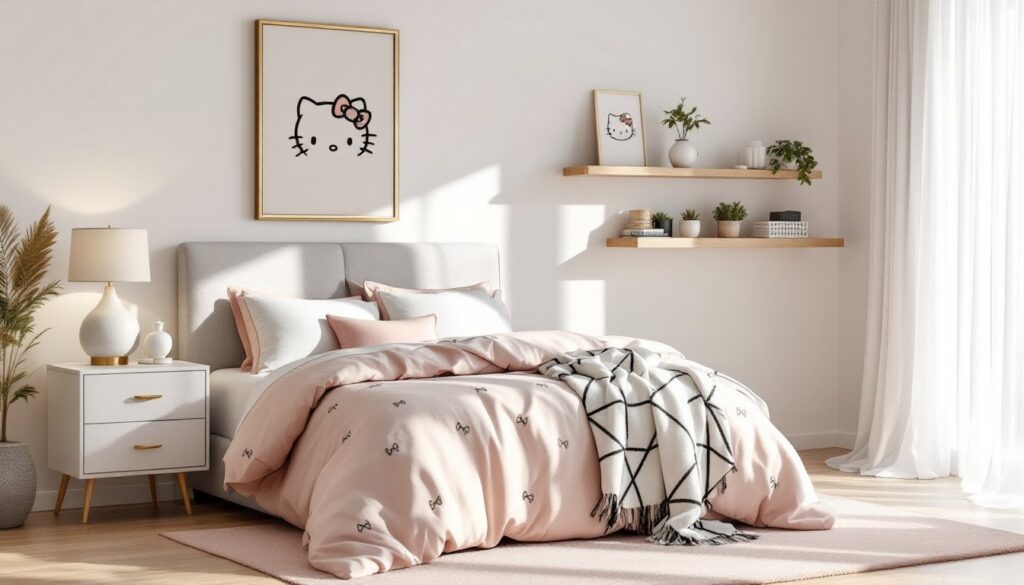
The key to making Hello Kitty decor work in a room that doesn’t feel juvenile is restraint and intentional design choices. Start with a neutral base, white, gray, or soft beige walls, and introduce the theme through accent pieces rather than saturating every surface.
Limit the color palette. Instead of using every color associated with the character, pick two or three and stick with them. A black, white, and pink scheme feels modern and clean. Adding metallics like gold or rose gold elevates the look further, especially in light fixtures, drawer pulls, or picture frames.
Many approaches to modern home decor emphasize the power of negative space and curated accents, principles that apply equally well to themed rooms. A single large piece, like a framed vintage-style Hello Kitty poster, often makes a stronger statement than a dozen small items scattered around.
Mix in non-themed pieces. A room filled exclusively with character merchandise can feel overwhelming. Balance Hello Kitty items with solid-colored furniture, geometric patterns, or natural textures like wood and linen. This creates visual breathing room and makes the themed elements feel more intentional.
Scale matters. Oversized graphic prints or a single bold piece of wall art can feel sophisticated, while too many small knickknacks lean cutesy. Group smaller items together on a shelf or tray to create one cohesive vignette instead of spreading them throughout the room.
Choose quality over quantity. A well-made duvet cover in a subtle print will outlast and outperform a cheap comforter covered in garish graphics. Look for products with reinforced seams, durable zippers, and colorfast dyes that won’t fade after a few washes.
Consider the finish and texture. Matte finishes, natural fibers, and understated fabrics like linen or cotton feel more grown-up than shiny synthetics or overly busy patterns. Even within a themed room, material choice affects the overall vibe.
Lighting also plays a role. Swap out builder-grade fixtures for something with a bit more personality, a pendant light with a geometric shade or a table lamp with a ceramic base. The lighting doesn’t need to be Hello Kitty-branded to fit the room: it just needs to complement the color scheme and style.
Conclusion
Hello Kitty bedroom decor can work for a wide range of ages and design preferences when approached thoughtfully. The character’s simple, iconic design adapts well to different aesthetics, whether someone’s going bold with full-wall murals or subtle with a few accent pieces. By focusing on quality materials, intentional color choices, and a balanced mix of themed and neutral elements, it’s entirely possible to create a space that feels fun, personal, and well-designed rather than chaotic or overly juvenile.