
Table of Contents
ToggleBohemian wall decor brings warmth, personality, and effortless creativity to any room. It’s the opposite of minimalist sterility, think layered textures, global influences, and a collected-over-time aesthetic that feels lived-in rather than catalog-perfect. Whether you’re working with a blank rental wall or refreshing a tired bedroom, boho styling offers flexibility without requiring a full renovation. The beauty lies in mixing materials, embracing imperfection, and creating visual interest without strict rules. This guide walks through the core principles, essential elements, hands-on projects, and arrangement strategies to help anyone achieve an authentic bohemian look.
Key Takeaways
- Bohemian wall decor emphasizes layered textures, global influences, and personal expression over matching coordination, creating a lived-in aesthetic that rejects minimalist sterility.
- Anchor your space with one large focal piece like a tapestry or statement macramé, then build asymmetrically around it using odd-numbered groupings and varied scales for organic visual balance.
- Essential materials for authentic boho walls include textiles, natural fibers like rattan and woven baskets, reclaimed wood, and metal accents that showcase their origins and add warmth to any room.
- DIY bohemian wall projects such as macramé hangings, painted geometric accent walls, and embroidery hoop art offer affordable, beginner-friendly ways to achieve the boho look without professional installation.
- Mix different orientations, depths, and colors by repeating 2–3 accent tones across pieces and combining flat art with three-dimensional objects like floating shelves and wall planters for shadow play and depth.
- Plan your layout on kraft paper or the floor before mounting to ensure proper spacing, proportions, and weight distribution—a critical step for renters and anyone avoiding unnecessary wall damage.
What Makes Wall Decor Bohemian?
Bohemian style pulls from multiple design traditions, Moroccan, Indian, Southwestern, and mid-century eclectic, unified by a preference for handmade items, natural materials, and personal expression over matchy-matchy coordination. The hallmark is layering: different patterns, textures, and scales coexist without competing.
Key characteristics that define boho walls include:
- Textural depth: woven fibers, macramé, rattan, jute, and raw wood alongside smooth ceramics or metal
- Warm, earthy color palettes: terracotta, ochre, sage, cream, rust, and deep indigo, anchored by neutrals
- Global or vintage finds: carved wood panels, batik prints, vintage rugs hung as tapestries, or handwoven baskets
- Asymmetry: gallery walls that feel organic rather than grid-locked, with varied frame styles and heights
- Plants and greenery: trailing pothos, mounted staghorn ferns, or hanging planters integrated into the wall composition
Boho decor isn’t about buying a coordinated set from a big-box store. It thrives on thrifted treasures, DIY projects, and pieces that tell a story. If it looks too polished or sterile, it’s missing the soul that makes bohemian style work.
Essential Elements for Authentic Boho Walls
Textiles and Tapestries
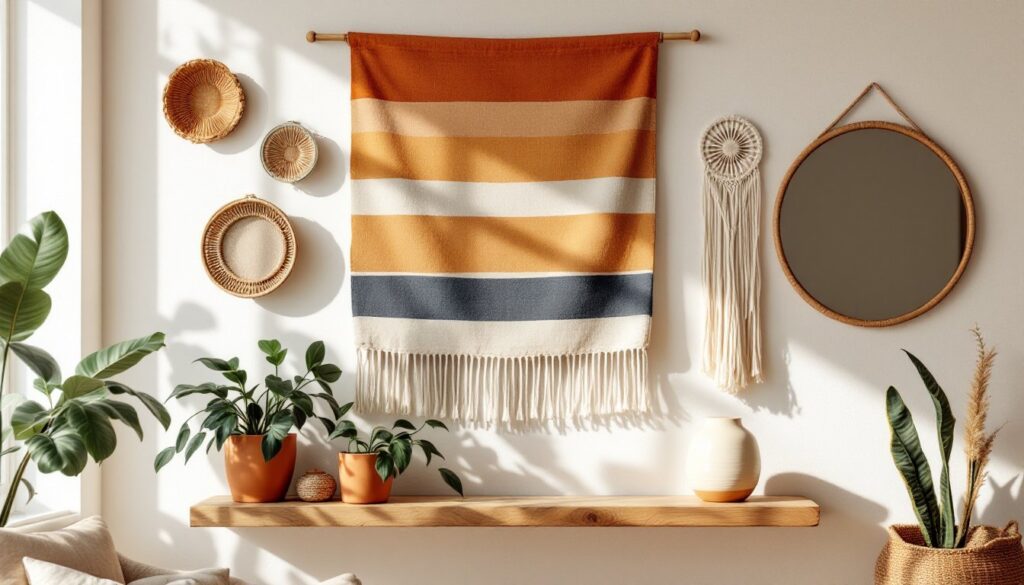
Fabric is the backbone of bohemian wall decor. Large-scale tapestries anchor a room and add instant warmth. Look for hand-blocked prints, kantha quilts, or Turkish kilims, vintage pieces often have richer dyes and more character than mass-produced versions.
Mounting textiles properly prevents sagging and wall damage. Use a wooden dowel or curtain rod slipped through a sleeve or loops sewn into the top edge. For lightweight fabrics, removable adhesive strips work on rental walls: heavier tapestries need anchors into wall studs or toggle bolts in drywall (rated for the fabric’s weight plus the rod). Avoid nails driven into drywall alone, they’ll pull out under tension.
Macramé wall hangings add texture without color. Cotton cord macramé in natural tones pairs well with patterned textiles. Hang them at varying heights to create movement. If working in humid climates, skip jute or sisal macramé indoors, they can mildew. Stick with cotton or synthetic blends.
Natural Materials and Textures
Authentic boho leans heavily on materials that show their origins. Rattan mirrors, woven baskets, and driftwood shelves bring organic shapes and neutral tones that ground busier elements.
Basket walls are a classic boho move: cluster shallow woven baskets (African, Native American, or Southeast Asian styles) in odd-numbered groupings. Secure each basket with a small finishing nail through the back weave or use plate hangers for damage-free hanging. Space them 2–4 inches apart for visual cohesion without crowding.
Wood elements like reclaimed barn wood, carved panels, or floating shelves made from live-edge slabs add warmth. Sand any rough edges (80-grit then 120-grit) and apply a clear matte polyurethane or tung oil to protect against moisture and fingerprints. If mounting shelves, locate studs with a stud finder and use wood screws at least 2.5 inches long into studs, or heavy-duty anchors rated for the load if studs aren’t where you need them.
Incorporate metal accents sparingly: hammered brass, wrought iron candle sconces, or wire wall planters add contrast without overwhelming the natural palette. Many decorators experimenting with interior design ideas blend metals with textiles to balance hard and soft surfaces.
DIY Bohemian Wall Decor Projects You Can Make Today
Macramé Wall Hanging (Beginner)
You’ll need 3mm cotton cord (about 200 feet for a medium hanging), a wooden dowel (1-inch diameter, 24–36 inches long), scissors, and a tape measure.
- Cut eight cords, each 10 feet long.
- Fold each cord in half and loop it over the dowel using a lark’s head knot (fold creates a loop, pass ends through the loop around the dowel).
- Work rows of square knots, alternating cords to create a diamond or chevron pattern.
- Trim the bottom fringe at an angle or leave it long and unravel the cord ends for a tassel effect.
- Hang the dowel using picture wire or twine tied at each end.
Painted Geometric Accent Wall (Intermediate)
Create a focal wall with hand-painted shapes, arches, stripes, or abstract blocks, in earthy tones.
Materials: latex paint in 2–3 colors (low-VOC interior, eggshell or matte finish), painter’s tape (FrogTape works well for clean lines), level, pencil, 2-inch angled brush, small foam rollers.
- Prep the wall: patch any holes with spackle, sand smooth, wipe down with a damp cloth.
- Sketch your design lightly in pencil. Use a level to keep lines straight.
- Tape off sections, pressing tape edges firmly to prevent bleed.
- Apply paint in thin coats (two coats usually needed for solid coverage). Remove tape while the final coat is still slightly tacky for the cleanest edges.
- Touch up any bleeds with a small artist’s brush.
Driftwood and Air Plant Display (Easy)
Mount a piece of driftwood or a grapewood branch (available at craft stores) horizontally on the wall. Attach small air plants (Tillandsia) using floral wire or hot glue. Add twine or leather cord loops to hang small glass terrariums or brass planters.
Secure the wood with L-brackets screwed into studs, or use heavy-duty picture hangers rated for the wood’s weight. Air plants need bright, indirect light and a weekly 10-minute soak, make sure the display location supports plant health, not just aesthetics.
Fabric-Backed Embroidery Hoop Art (Easy)
Stretch vintage scarves, block-print fabric, or even pages from old botanical prints inside wooden embroidery hoops (6–10 inch diameter). Trim excess fabric on the back, secure with hot glue, and hang from a ribbon or leather cord. Group multiple hoops in varying sizes for a collected look. This project is popular among those exploring DIY decor tutorials for quick, low-cost wall fillers.
How to Arrange Bohemian Wall Decor Like a Pro
Start with an anchor piece. In most boho walls, one large element grounds the composition, a tapestry, oversized mirror, or statement macramé. Position it first, typically centered or slightly off-center at eye level (57–60 inches from the floor to the center of the piece).
Layer around the anchor. Add medium-sized items (baskets, framed prints, shelves) asymmetrically, leaving intentional negative space. Boho isn’t about filling every inch: it’s about balance through variety. Place heavier visual weight lower and lighter elements higher to avoid a top-heavy feel.
Use odd numbers. Groups of three, five, or seven items feel more organic than pairs. Vary the spacing, some pieces closer together, others with breathing room.
Mix orientations and depths. Combine flat art with three-dimensional objects like wall planters, woven baskets, or floating shelves holding small ceramics. This creates shadow play and visual interest from multiple angles.
Mind the scale. A single tiny print on a big wall looks lost. If working with smaller pieces, cluster them tightly in a salon-style arrangement. For renters, map the layout on kraft paper taped to the wall before committing to holes.
Color and pattern flow. Repeat 2–3 accent colors across different pieces to create cohesion without matching. If the tapestry has rust and indigo, echo those tones in throw pillows, pottery, or a painted frame.
Lighting matters. Uplighting a woven basket wall or adding picture lights above art emphasizes texture. Avoid harsh overhead fluorescents, warm LED bulbs (2700K–3000K) enhance the earthy palette. Homeowners seeking budget makeovers often find that better lighting transforms existing decor more than buying new pieces.
Test before committing. Lay everything on the floor in the arrangement before mounting. Take a photo from standing height to check proportions. Once satisfied, measure and mark nail or hook placements with painter’s tape.
Hardware tips: Use picture hangers rated for each item’s weight. For drywall, plastic anchors work for items under 10 pounds: toggle bolts or molly bolts handle 20–50 pounds. Always pre-drill pilot holes to prevent cracking. Keep a level handy, even boho benefits from pieces that aren’t accidentally crooked.
Conclusion
Bohemian wall decor thrives on personal expression, natural textures, and the confidence to layer without overthinking. The best boho spaces evolve over time, thrifted finds, DIY projects, and travel souvenirs mixing with intention but never rigidity. Start with one anchor piece, build around it with varied materials and scales, and trust your eye. The result is a space that feels warm, collected, and unmistakably yours.