
Table of Contents
ToggleA bathroom vanity isn’t just a functional necessity, it’s often the first thing people notice when they step into the space. Yet too many homeowners treat it like a catch-all for toothpaste tubes and stray hair ties. With a few intentional decor choices, a vanity can become a focal point that ties the entire bathroom together. The good news? Styling a vanity doesn’t require a full renovation or a designer’s budget. From trays and greenery to smart storage solutions, small changes make a big impact. This guide walks through practical, stylish approaches to vanity decor that work in real homes, not just in magazine spreads.
Key Takeaways
- Bathroom vanity decor combines functionality with style by using trays, organizers, and natural elements to create a composed, intentional focal point that reflects your home’s design aesthetic.
- A well-styled vanity uses height variation and the 3–5 items per tray rule to balance visual appeal with accessibility while keeping daily essentials within reach.
- Match your vanity decor to your design style—whether modern minimalist, farmhouse, traditional, coastal, or industrial—and maintain consistent metal finishes for a cohesive look.
- Budget-friendly DIY vanity decor projects like mason jar soap dispensers, painted trays, and rope-wrapped containers cost under $20 each and require minimal tools or skills.
- Keep your vanity beautiful and functional by editing ruthlessly, using drawer organizers for hidden storage, and maintaining a 6–8 inch buffer zone around the basin to prevent water damage.
- Rotate seasonal decor elements—candle scents, flowers, or small touches—to refresh your bathroom vanity without major changes or expense.
Why Your Bathroom Vanity Deserves More Attention
Most people spend a good chunk of their morning and evening routines standing at the vanity. That’s prime real estate in terms of daily interaction. A cluttered or bare vanity can make the whole bathroom feel neglected, even if the tile and fixtures are in great shape.
A well-styled vanity does three things: it keeps daily essentials organized, it reflects the home’s overall design aesthetic, and it makes the bathroom feel intentional rather than thrown together. Whether working with a pedestal sink in a powder room or a double vanity in a primary bath, the principles are the same.
Think of vanity decor as the bathroom equivalent of a well-set kitchen counter. It’s functional first, decorative second, but when done right, those two goals support each other. The key is balancing accessibility with visual appeal, so items in constant use stay within reach without creating visual noise.
Essential Elements for Styling Your Bathroom Vanity
Trays and Organizers: The Foundation of Vanity Decor
A decorative tray is the single most effective tool for corralling vanity clutter. It creates a defined zone for frequently used items, hand soap, lotion, a candle, and instantly makes the setup look composed. Materials matter here: a marble or ceramic tray suits modern and transitional styles, while a wooden or woven tray works well in farmhouse or coastal bathrooms.
Size the tray to the vanity. On a 36-inch single vanity, a tray around 10 to 12 inches wide leaves room for other elements without crowding. For a 60-inch double vanity, consider two smaller trays (one per sink) or a single long tray centered between the basins.
Pair trays with vertical organizers when counter space is tight. A tiered stand or small apothecary jars keep cotton rounds, swabs, and other small items visible but contained. Glass or acrylic organizers work in almost any style and don’t visually compete with tile or countertop patterns.
Avoid overloading trays. Three to five items per tray is the sweet spot, any more and it starts looking cluttered again. Rotate items seasonally if needed, swapping a summer candle scent for a winter one or switching out a vase of fresh flowers.
Greenery and Natural Elements
Plants bring life to a bathroom, and the vanity is often the best-lit spot for them. Pothos, snake plants, and ZZ plants tolerate the humidity and lower light levels common in bathrooms without much fuss. For vanities near windows, succulents and air plants are low-maintenance options.
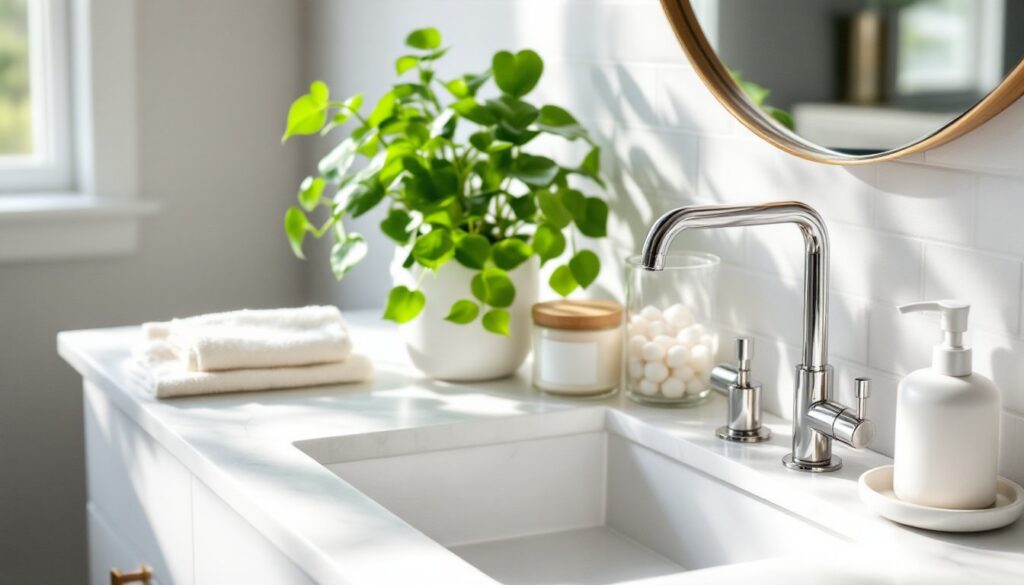
Choose planters that complement the vanity finish. A matte black planter pairs well with oil-rubbed bronze or matte black faucets: a white ceramic pot suits chrome or brushed nickel fixtures. Keep scale in mind, a 4- to 6-inch pot is proportional to most vanities without hogging counter space.
If live plants aren’t practical (maybe the bathroom has no window), high-quality faux greenery works. Opt for realistic silk or plastic varieties and dust them regularly so they don’t look cheap. A small bundle of eucalyptus or a single stem in a bud vase can be as effective as a full plant.
Natural elements extend beyond plants. A small wooden bowl, a bundle of dried flowers, or a piece of driftwood can add texture and warmth, especially in bathrooms with lots of tile and glass. These touches soften hard surfaces and make the space feel less sterile.
Vanity Decor Ideas for Different Design Styles
Modern/Minimalist: Keep it sparse. A single statement piece, like a sculptural soap dispenser or a sleek tissue box cover, does the work. Stick to a monochrome or neutral palette: white, black, gray, or natural wood. Avoid busy patterns or multiple small items competing for attention. Looking for sophisticated bathroom vanity designs can offer helpful inspiration for achieving a minimalist aesthetic.
Farmhouse/Rustic: Embrace texture and vintage finds. A galvanized metal tray, a mason jar soap dispenser, or a small enamelware pitcher for cotton swabs fits the style. Incorporate wood tones and soft whites. A wooden ladder leaning against the wall (if space allows) or a woven basket tucked under a floating vanity adds warmth.
Traditional/Classic: Symmetry and polish define this look. Pair matching soap dispensers and lotion bottles, preferably in glass or ceramic with classic shapes. A small framed mirror propped on the vanity, a tissue box with decorative trim, and fresh flowers in a crystal vase complete the picture. Stick to muted tones, cream, taupe, navy, or sage.
Coastal: Light, airy, and beachy without going full nautical. Think white or light wood trays, blue glass accents, and natural textures like rope or jute. A small bowl of shells or coral (real or faux) and a linen hand towel in a soft blue or sand tone reinforce the vibe. Avoid clichés like anchor motifs unless they’re subtle.
Industrial: Raw materials and metal finishes dominate. A black metal tray, concrete accessories, and Edison bulb-style lighting (if upgrading fixtures) support this style. Keep decor minimal and functional, think a metal soap pump, a simple succulent in a concrete planter, and maybe a small apothecary jar with a metal lid.
No matter the style, consistency matters. If the faucet is brushed nickel, don’t mix it with oil-rubbed bronze accessories. Match metal finishes across hardware and decor for a cohesive look.
Practical Tips for Keeping Your Vanity Both Beautiful and Functional
Edit ruthlessly. The vanity isn’t a storage unit. If it’s not used daily or doesn’t serve a decorative purpose, it doesn’t belong on the counter. Stash backup toiletries, medications, and cleaning supplies in drawers or a linen closet.
Use drawer organizers. What’s out of sight still counts. Acrylic drawer dividers or bamboo organizers keep makeup, razors, and hair tools tidy, so pulling out a drawer doesn’t undo all the countertop styling work.
Anchor with height variation. A flat surface looks boring. Mix heights with a tall vase or bottle, a medium-height soap dispenser, and a low tray or dish. This creates visual interest without adding clutter. Creative bathroom vanity designs often demonstrate this layering technique effectively.
Keep cleaning supplies handy but hidden. A microfiber cloth tucked in a drawer makes it easy to wipe down the vanity daily. Toothpaste splatters and soap drips are inevitable, quick maintenance keeps decor looking sharp.
Mind the faucet reach. Don’t place tall items too close to the faucet. Water splashes, and damp decor gets grimy fast. Leave a 6- to 8-inch buffer zone around the basin.
Match towel and decor colors. Hand towels are part of the vanity landscape. A coordinated towel, folded and placed on a towel ring or bar nearby, pulls the look together. If the decor is neutral, this is a good spot to introduce a subtle accent color.
Rotate decor seasonally. Swap out candles, soap scents, or small seasonal touches (a sprig of pine in winter, a shell in summer) to keep things fresh without a full overhaul.
Budget-Friendly DIY Vanity Decor Projects
Mason jar soap dispensers: Pick up a pump lid kit (around $3 online) and screw it onto a standard pint mason jar. Paint or leave the jar clear. Total cost: under $5. It’s a farmhouse staple but works in transitional spaces too.
Painted trays: A plain wooden tray from a craft store (typically $8 to $12) plus a can of spray paint or acrylic paint becomes a custom piece. Sand lightly, prime if needed, and apply two coats. Seal with a clear polyurethane topcoat for water resistance. Choose a color that ties into the bathroom’s palette.
Upcycled containers: Clean glass jars (from candles, pickles, or pasta sauce) make great organizers. Remove labels with hot water and dish soap, then soak in a mix of baking soda and oil to tackle stubborn adhesive. Use them for cotton swabs, makeup brushes, or small succulents. Total cost: free.
DIY concrete accessories: Concrete mix (a small bag is around $10) and silicone molds (reusable, $8 to $15) produce custom soap dishes, toothbrush holders, or small planters. Mix according to package directions, pour, let cure for 24 to 48 hours, then seal with a concrete sealer for water resistance. This project takes some patience but yields high-end-looking results.
Rope-wrapped containers: Wrap plain glass or plastic containers with jute or cotton rope using a hot glue gun. Start at the bottom, applying glue in small sections and pressing the rope into place. It adds texture and hides less-than-perfect containers. A spool of rope costs $5 to $8 and covers several projects.
Framed prints or quotes: Print a simple line drawing, botanical illustration, or favorite quote on cardstock. Frame it in a thrift store or discount frame (often $5 to $10), and prop it on the vanity or hang it on the wall behind. This adds personality without permanent commitment. Many bathroom vanity ideas incorporate wall decor to enhance the overall styling.
Spray-painted hardware: If existing organizers or trays don’t match the new decor scheme, a can of spray paint (around $5) can unify mismatched pieces. Clean thoroughly, apply a coat of primer if switching from dark to light, then apply two thin coats of paint. Let dry fully before use.
These projects require minimal tools, most need just a paintbrush, hot glue gun, or scissors, and cost less than $20 each. They’re beginner-friendly and offer a way to personalize the space without committing to expensive store-bought decor.