
Table of Contents
ToggleBlank walls can make even a well-furnished room feel unfinished. Oversized wall decor solves that problem by anchoring a space, adding visual weight, and creating a focal point that pulls the design together. Whether it’s a six-foot canvas, an industrial metal sculpture, or a wall-spanning mirror, large-scale pieces make a dramatic impact without requiring a complete room overhaul. This guide covers how to select, install, and even build oversized wall decor that fits your space and skill level.
Key Takeaways
- Oversized wall decor anchors a room by creating a focal point and visual weight that pulls an entire design together without requiring a complete renovation.
- Scale matters: wall art should occupy roughly two-thirds to three-quarters the width of the furniture below it, and oversized pieces naturally meet this guideline for modern interiors.
- Popular oversized wall decor options include large canvas art, mirrors that expand small spaces, and metal sculptures, each offering distinct visual and functional benefits.
- Proper installation requires locating wall studs for pieces over 30 pounds, using toggle bolts or molly anchors rated for double the weight, and hanging with a level for safety and alignment.
- DIY oversized wall decor projects like plywood grids, fabric-wrapped canvases, and wood plank features cost $30–$80 and deliver custom, budget-friendly alternatives to ready-made pieces.
Why Oversized Wall Decor Makes a Bold Design Statement
Oversized wall decor commands attention in ways smaller pieces can’t. A single large piece creates a clean, intentional look, especially in open-concept homes or rooms with high ceilings where multiple small frames would look scattered.
From a practical standpoint, one statement piece is easier to hang and maintain than a gallery wall. It simplifies decision-making, no need to fuss over spacing, leveling multiple frames, or coordinating five different styles. Large decor also helps define zones in open layouts, acting as a visual anchor for seating areas or dining spaces.
Scaling matters. A 12×12-inch print on a 15-foot wall looks lost. Designers typically recommend that wall art occupy roughly two-thirds to three-quarters the width of the furniture below it (a sofa, console, or bed). Oversized pieces meet that guideline with ease, especially in contemporary or minimalist interiors where less is more.
There’s also a psychological element. Bold, large-scale art or decor signals confidence and intentionality. It tells visitors, and the homeowner, that the space is curated, not just furnished.
Best Types of Oversized Wall Decor for Every Room
Large Canvas Art and Prints
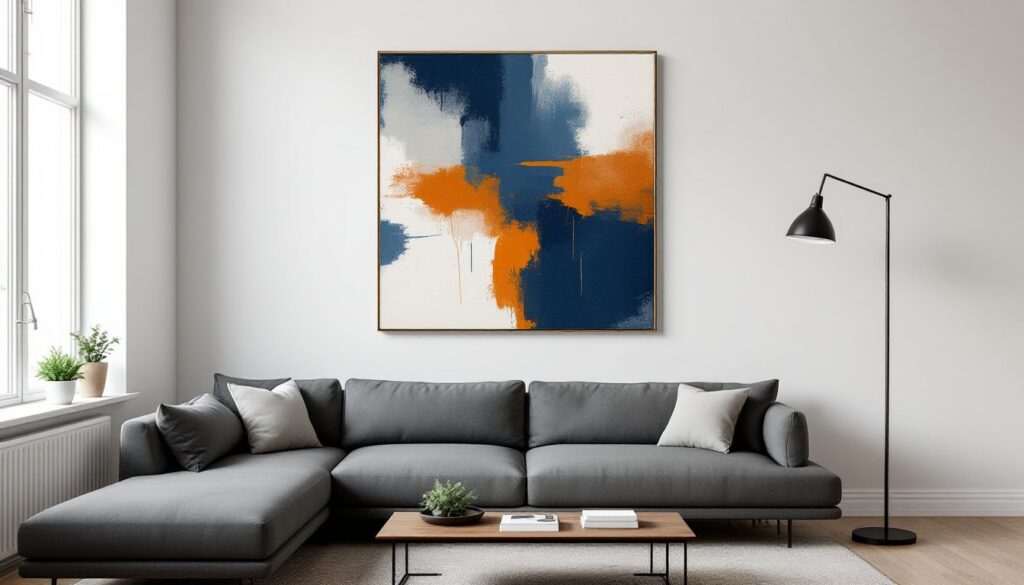
Canvas prints and stretched canvas paintings are the most popular oversized wall decor options. They’re lightweight, frameless, and available in nearly any size or subject matter. A 48×72-inch abstract canvas can fill a living room wall without the heft of a framed poster.
Look for gallery-wrapped canvases with at least 1.5-inch-deep stretcher bars so the image wraps around the sides, no frame needed. Cheaper canvases use thin bars that make the piece look flimsy from an angle.
For a more affordable route, large-format prints on heavyweight paper (at least 200 gsm) can be mounted to foam core or framed under acrylic. Print-on-demand services offer custom sizing up to 60 inches wide, useful for turning personal photography or digital art into statement pieces.
Oversized photography works especially well in minimalist or industrial spaces. Black-and-white cityscapes, nature macros, or architectural shots create striking focal points when printed at 40+ inches.
Oversized Mirrors and Metal Wall Sculptures
Oversized mirrors do double duty: they function as decor and make small rooms feel larger by reflecting light. A 36×60-inch leaner mirror propped against a wall or a round mirror with a 40-inch diameter works well in entryways, bedrooms, or above a fireplace.
When selecting mirrors, check the backing material. MDF-backed mirrors are lighter and easier to hang than solid wood, but wood offers better longevity in humid environments like bathrooms.
Metal wall sculptures add texture and dimension. Welded steel, hammered copper, or powder-coated aluminum pieces can span 60+ inches and weigh considerably less than wood or stone. Geometric designs, abstract forms, or nature-inspired motifs (branches, leaves, waves) suit modern and transitional interiors.
For rustic or farmhouse aesthetics, consider oversized wooden wall art, reclaimed barn wood panels, carved medallions, or stained shiplap arrangements. These tend to be heavier, so factor in wall anchors rated for 50+ pounds.
How to Choose the Right Oversized Piece for Your Wall
Start with measurements. Use painter’s tape to outline the potential size of the piece directly on the wall. Live with that outline for a day or two, it’ll quickly reveal whether the scale feels right or overwhelming.
As a rule of thumb, leave 6 to 12 inches of wall space around all sides of the decor. A piece that’s too close to the ceiling, floor, or adjacent walls feels cramped. For art above furniture, position the bottom edge 8 to 10 inches above the sofa or console. Eye level (57 to 60 inches from the floor to the center of the piece) works for hallways and open walls.
Consider wall material before committing. Drywall over studs supports heavy decor with the right anchors, but older lath-and-plaster walls can crack if hardware isn’t installed carefully. Brick and concrete require masonry anchors and a hammer drill.
Color and style matter less than scale and proportion, but cohesion helps. If the room leans warm (wood tones, earth colors), metal sculptures in bronze or rust finishes integrate better than chrome. Cool-toned spaces (grays, blues, whites) pair well with black-and-white photography or minimalist line art.
Lighting plays a role too. Art with matte finishes works under direct overhead lights, while glossy prints or glass-covered frames can create glare. If the wall gets strong natural light, UV-protective glass or fade-resistant canvas helps preserve colors over time.
Installation Tips: Hanging Large Wall Decor Safely
Safety first: Wear safety goggles when drilling overhead, and use a sturdy stepladder (not a chair). Large decor injuries usually happen during installation, not after.
For anything over 30 pounds, locate wall studs with a stud finder and anchor into them whenever possible. Standard drywall anchors fail under sustained weight. If studs don’t align with your desired placement, use toggle bolts or molly anchors rated for the piece’s weight plus 50%. Always round up.
Most large canvas art and metal sculptures include D-rings or sawtooth hangers. For pieces over 50 pounds, upgrade to heavy-duty picture hanging wire (rated for at least twice the weight) and install two hooks spaced 16 to 24 inches apart for stability.
Here’s a basic process:
- Mark the desired center point on the wall with a pencil.
- Measure the distance from the top of the frame to the hanging hardware.
- Subtract that measurement from your center-point mark to find hook placement.
- Drill pilot holes (use a 3/16-inch bit for wood studs, appropriate bit for anchors).
- Install hooks or anchors, then hang the piece.
- Use a 4-foot level to check alignment before tightening hardware.
For oversized mirrors, French cleats offer the most security. A French cleat is a 45-degree beveled rail (one piece mounts to the wall, the other to the back of the mirror). It distributes weight evenly and prevents tipping. You can buy metal cleats or make your own from 1×4 lumber ripped at 45 degrees on a table saw.
If the piece leans rather than hangs, anchor it to the wall with furniture straps or L-brackets to prevent tipping, especially important in homes with kids or pets.
DIY Oversized Wall Decor Projects to Try
Building your own oversized wall decor saves money and guarantees a custom fit. Here are three approachable projects.
Plywood Grid Panel
Cut a 4×8-foot sheet of 1/2-inch plywood into a grid using a circular saw or table saw. Paint or stain each section in complementary tones (grays, whites, and one accent color). Attach the grid to the wall with construction adhesive and finishing nails into studs. Total material cost: around $40–$60.
Fabric-Wrapped Canvas
Stretch decorator fabric (upholstery weight works best) over artist stretcher bars. Build or buy a frame in your desired size (48×60 inches is manageable). Staple the fabric to the back of the frame with a heavy-duty staple gun, pulling taut as you go. This works especially well with bold geometric prints or textured linen. Material cost: $30–$80 depending on fabric choice.
Wood Plank Feature Wall
Install horizontal or vertical 1×6 pine boards (actual dimensions: 3/4 × 5 1/2 inches) directly to the wall with a nail gun. Space them evenly or vary the widths for visual interest. Sand, stain, or whitewash for a custom finish. This technique is popular in modern farmhouse interiors and adds texture without paint. A 10×10-foot section requires roughly 20 boards at $4–$7 each.
Rope or Macrame Wall Hanging
For a bohemian or coastal look, create an oversized macrame piece using 6mm cotton rope and a wooden dowel (1 1/2-inch diameter, 60 inches long). Basic knots (square knot, half hitch) are beginner-friendly, and tutorials for large-scale designs are widely available. Hang the dowel from ceiling hooks using heavy chain or rope rated for the weight.
Each project requires basic tools: circular saw or miter saw, drill, level, tape measure, and appropriate fasteners. Prep work, measuring twice, cutting once, and dry-fitting before final assembly, prevents most rookie mistakes.