
Table of Contents
ToggleA child’s bedroom is more than just a place to sleep, it’s their personal universe where imagination runs wild and memories take root. The walls surrounding them can either blend into the background or become a canvas that sparks creativity, learning, and comfort. Unlike adult spaces where neutrals reign, kids’ rooms offer the rare freedom to experiment with bold colors, interactive elements, and evolving designs that grow alongside them. Whether tackling a nursery refresh or updating a preteen’s hideout, the right wall decor strikes a balance between visual impact and functional design without requiring a gut renovation or professional installer.
Key Takeaways
- Kids room wall decor serves dual purposes—defining room identity with flexible, removable options while supporting developmental stages through interactive and educational elements.
- Removable peel-and-stick decals, hand-painted accent walls with low-VOC paint, and 3D elements like pennant banners transform spaces without permanent commitment as children’s interests evolve.
- Functional wall solutions like pegboards, magnetic paint sections, and floating shelves maximize vertical space while keeping play areas open—critical in smaller bedrooms.
- Test paint colors with large swatches in the actual room over 48 hours before committing, as lighting conditions dramatically affect how colors appear throughout the day.
- Wall-mounted storage and interactive wall art (chalkboard paint, educational posters, pegboards) eliminate floor clutter while doubling as decor that grows with your child.
- Ensure proper installation by locating wall studs for heavier items and using appropriate anchors—toggle bolts for drywall and wall screws into studs prevent dangerous tip-overs.
Why Wall Decor Matters in a Child’s Room
Wall treatments in kids’ spaces serve dual purposes that adult rooms rarely demand. First, they define the room’s identity without permanent commitment, crucial when a dinosaur enthusiast becomes a space explorer within six months. Removable decals, gallery walls with swappable frames, and painted accent walls offer flexibility that wallpaper or built-ins can’t match.
Second, thoughtful wall decor supports developmental stages. Younger children benefit from high-contrast patterns and tactile elements that encourage sensory exploration. School-age kids thrive with organizational systems like pegboards, magnetic paint sections, or corkboard strips that turn walls into functional zones for assignments, art display, or collections.
The structural advantage matters too. Unlike freestanding furniture that clutters floor space, wall-mounted solutions keep play areas open while maximizing vertical real estate, especially critical in smaller bedrooms (10×10 feet or under). Just ensure you’re hitting studs for anything heavier than two pounds: standard drywall anchors rated for 20-50 pounds work for lightweight frames, but shelving with books or toys demands 1.5-inch screws into wall studs spaced 16 inches on center per IRC guidelines.
Popular Wall Decor Styles for Kids’ Rooms
Whimsical and Playful Themes
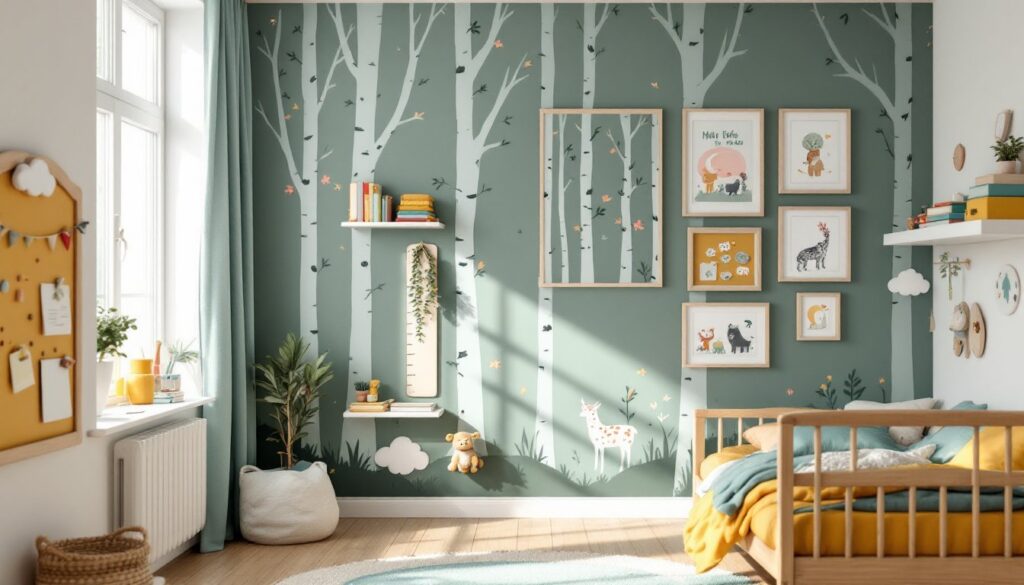
Murals and large-scale graphics dominate this category, transforming blank walls into forests, underwater scenes, or cityscapes. Peel-and-stick wall decals (typically vinyl or fabric-based) install without adhesive residue, making them renter-friendly and easy to update. Look for products labeled “repositionable” if you’re working around light switches or outlets, they allow minor adjustments during installation.
Hand-painted accent walls offer more permanence but require prep work. Clean the surface with TSP (trisodium phosphate) solution, patch any holes with spackle, and apply primer rated for high-hide coverage (about 350-400 sq ft per gallon) before topcoats. Use low-VOC or zero-VOC paints to minimize off-gassing in enclosed spaces, children’s respiratory systems are more sensitive to volatile organic compounds than adults’.
3D elements like fabric pennant banners, paper lanterns, or wooden name letters add depth without taking up square footage. Mount these with adhesive strips rated for the item’s weight, or use small finishing nails if you’re comfortable patching and touching up paint later. Modern design trends for children’s spaces lean toward layered textures rather than single flat graphics.
Educational and Interactive Wall Art
Chalkboard paint and magnetic primer turn sections of wall into functional learning tools. Standard chalkboard paint requires two coats over primer: magnetic primer needs three coats minimum to develop adequate pull strength (test with actual magnets before topcoating). Both products work on drywall, wood, or previously painted surfaces after light sanding with 120-grit paper.
World maps, alphabet charts, and growth charts serve double duty as decor and teaching aids. Frame these behind acrylic rather than glass, it’s lighter (matters for wall anchors) and safer if dislodged. For a budget-friendly alternative, print oversized educational posters at local copy shops on 24×36-inch or 36×48-inch bond paper and mount them with poster rails or clipboards.
Pegboard installations create modular systems that evolve with the child’s interests. Standard 1/4-inch pegboard comes in 4×8-foot sheets: cut to size with a circular saw (wear a dust mask, tempered hardboard creates fine particles). Mount pegboard 1 inch off the wall using furring strips so hooks have clearance to insert. Paint it to match the room or leave the natural tan finish for an industrial look.
DIY Wall Decor Projects You Can Create at Home
Materials for a Simple Gallery Wall:
• 5-7 frames (mix of 8×10, 11×14, and 5×7 sizes)
• Picture hanging wire or sawtooth hangers
• Measuring tape and level
• Pencil
• Drywall anchors or screws (depending on wall type)
• Kraft paper or newspaper for templates
Lay out the arrangement on the floor first, measuring the total footprint. Cut kraft paper templates matching each frame’s dimensions and tape them to the wall, this lets you adjust spacing before committing to holes. Standard spacing between frames runs 2-3 inches: tighter groupings feel more cohesive, wider spacing suits larger walls.
Fabric-Wrapped Panels provide soft texture and sound absorption, helpful in echo-prone rooms with hardwood or tile floors. Cut 1/2-inch or 3/4-inch MDF boards to desired sizes (12×12, 16×20, or 24×36 inches work well). Wrap fabric tightly around the back, stapling every 2 inches with a standard staple gun. Use cotton, linen, or felt rather than synthetics for better acoustics. Hang panels with D-rings and appropriate wall anchors.
Painted Wood Cutouts (clouds, stars, mountains) add dimension without bulk. Trace shapes onto 1/4-inch plywood or MDF, cut with a jigsaw, sand edges smooth with 150-grit paper, then prime and paint. A miter saw isn’t necessary here, but steady hands with the jigsaw matter, clamp the workpiece to a sawhorse and let the blade do the work without forcing it. Attach finished pieces with adhesive strips or small L-brackets.
For budget-conscious projects, many successful DIY decorating approaches repurpose materials from other home projects, leftover trim becomes floating shelves, scrap fabric turns into bunting, and paint samples test accent colors before committing to full gallons.
Choosing the Right Colors and Patterns
Color psychology in children’s spaces follows different rules than adult interiors. While soft pastels suit nurseries, older kids often prefer saturated hues that energize rather than soothe. Accent walls in bold shades (navy, forest green, coral) anchor the room without overwhelming it, reserve three walls for lighter neutrals to maintain balance.
Test paint colors in the actual room before buying gallons. Lighting varies dramatically between north-facing and south-facing bedrooms, and what looks perfect on a paint chip can read completely different at 7 AM versus bedtime. Apply large swatches (at least 2×2 feet) on multiple walls and observe them over 48 hours in different light conditions.
Pattern scale matters more than people expect. Large-scale patterns (stripes wider than 6 inches, florals with 8-inch blooms) work in bigger rooms but can close in smaller spaces. Small, busy patterns create visual noise that competes with toys and furniture. Medium-scale geometrics, hexagons, chevrons, quatrefoils in the 3-5 inch range, offer pattern interest without chaos.
For cohesive design, pull colors from existing elements rather than starting from scratch. If the bedding features teal and yellow, echo those in wall art or a painted border. This approach, common in many home styling guides, creates intentional flow without requiring a design degree or perfect color theory knowledge.
Consider washability when selecting finishes. Flat paint hides imperfections but doesn’t clean well, problematic when crayon meets wall. Eggshell or satin finishes (10-25% sheen) wipe down with mild soap and water without leaving marks, making them practical for high-traffic kid zones. Reserve flat paint for ceilings only.
Smart Storage Solutions That Double as Decor
Wall-mounted storage eliminates the floor clutter that plagues kids’ rooms while contributing to the overall aesthetic. Floating shelves in contrasting colors become graphic elements, picture white shelves on a gray wall displaying books with colorful spines arranged by hue.
Install floating shelves properly to avoid sagging or failure. Locate studs with a stud finder (or the old knock-and-listen method if you’re experienced), and use 3-inch wood screws driven through the shelf bracket into the stud. For shelves between studs, use heavy-duty toggle bolts rated for the expected load, a shelf full of hardcover books can easily hit 30-40 pounds.
Cube organizers mounted horizontally create window seat-style storage underneath wall-mounted cushions. Standard cube units come in 2-, 4-, 6-, and 9-cube configurations: secure them to the wall with L-brackets to prevent tip-over hazards, this isn’t optional with children in the room, and tip-over incidents send thousands of kids to emergency rooms annually.
Rail systems with S-hooks hold everything from dress-up clothes to art supplies in clear bins. These work particularly well in tight spaces where cabinets would intrude. Mount the rail at the child’s height (adjust as they grow), and use labeled bins so cleanup becomes part of the room’s organization, not a treasure hunt.
Book ledges (shallow shelves with a lip) display covers forward rather than spines out, turning books into rotating art. Build simple versions from 1×3 pine boards with a 1×2 lip nailed along the front edge, or buy prefab versions. Space them 12-16 inches apart vertically to accommodate standard picture book heights (typically 9-11 inches).
Wear safety glasses when drilling into walls, especially when working overhead. Drywall dust and wood particles drop directly into eyes during installation. Keep a cordless drill charged and ready, mid-project battery death when you’re balancing on a ladder holding a shelf gets old fast.