
Table of Contents
ToggleGothic wall decor brings moody sophistication to any room, blending medieval-inspired details with modern drama. Unlike generic dark paint jobs, authentic gothic styling requires specific architectural elements, pointed arches, wrought iron accents, rich textures, and ornate detailing that reference church architecture and Victorian design. This aesthetic works equally well as a full-room commitment or strategically placed accents in eclectic spaces. Whether someone’s renovating a dedicated gothic room or adding a few statement pieces to an otherwise neutral home, understanding the core design principles prevents the space from looking like a Halloween store exploded.
Key Takeaways
- Gothic wall decor draws from medieval and Victorian design, emphasizing verticality, ornate architectural details, and dramatic light-and-shadow contrast rather than simply painting walls black.
- Authentic gothic wall decor requires specific materials like heavy wood, wrought iron, velvet, and aged metals—avoid plastic or synthetic alternatives that undermine the aesthetic.
- Essential gothic wall decor elements include ornate mirrors with substantial frames (4-6 inches wide), medieval-inspired tapestries, wrought iron accents, and faux stone textures applied strategically as focal points.
- DIY projects like faux stone accent walls and gothic gallery walls offer budget-friendly ways to implement the style, with material costs starting under $80 for a 10×10-foot wall.
- Proper lighting is structural to gothic design—use wall-mounted sconces, ornate lanterns, and uplighting rather than overhead fluorescents to create the necessary atmospheric shadow play.
- Safety is paramount when installing gothic wall decor: always use appropriate wall anchors for heavy pieces, locate studs with a stud finder, wear safety equipment, and ensure proper ventilation during paint and sealer projects.
What Makes Wall Decor Gothic?
True gothic wall decor draws from two primary historical movements: medieval Gothic architecture (1150-1500s) and Gothic Revival (Victorian era, 1830s-1900s). Both emphasize verticality, ornate detailing, and a deliberate contrast between light and shadow.
The color palette typically centers on deep burgundy, forest green, charcoal black, and midnight purple, often contrasted with metallic accents in aged bronze, antique gold, or wrought iron finishes. These aren’t the flat, matte blacks of minimalist design, gothic surfaces have depth, whether through layered paint techniques, textured wallpaper, or distressed finishes.
Architectural features define the style more than any single decorative object. Pointed arch motifs appear in mirrors, wall niches, and decorative molding. Quatrefoil patterns (four-lobed symmetrical shapes common in church windows) show up in metalwork and stenciled designs. Vertical elements, tall mirrors, floor-to-ceiling tapestries, elongated candle sconces, draw the eye upward, mimicking cathedral proportions even in standard 8-foot ceiling rooms.
Materials matter significantly. Authentic gothic spaces favor heavy wood (oak, walnut, mahogany), wrought iron, stone or faux stone textures, velvet, brocade, and aged metals. Plastic, acrylic, or obviously synthetic materials undermine the aesthetic. If budget doesn’t allow for solid wood carved frames, well-executed resin castings painted and distressed properly work better than glossy modern alternatives.
Lighting plays a structural role. Gothic design requires controlled, atmospheric lighting, never overhead fluorescents. Wall-mounted wrought iron candle sconces (wired for electricity or actual candles, depending on local fire codes), ornate metal lanterns, and strategically placed uplighting on textured walls create the necessary shadow play.
Essential Gothic Wall Decor Elements for Your Home
Ornate Mirrors and Frames
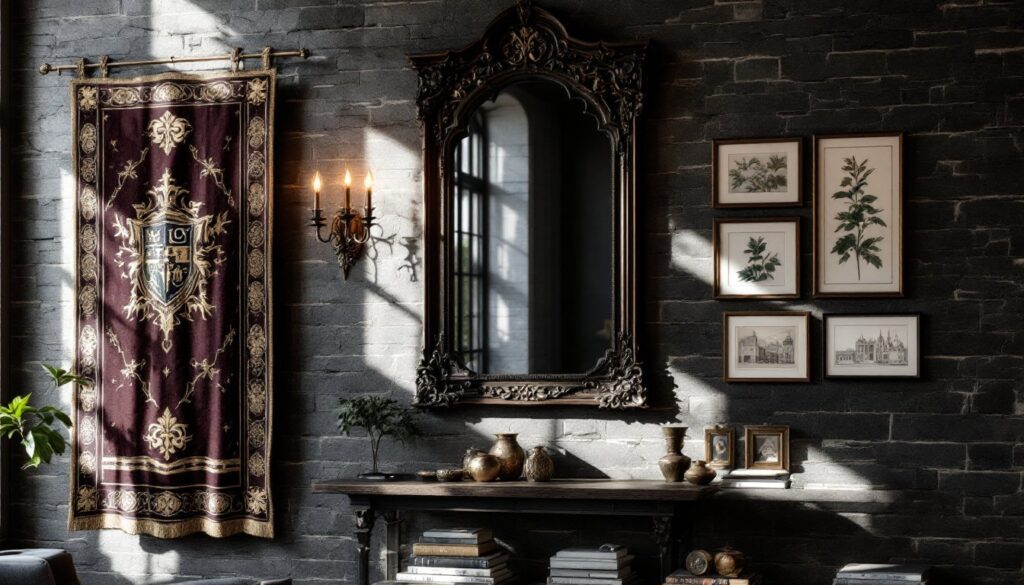
Oversized mirrors with carved or cast frames serve as gothic wall anchors. Look for frames featuring pointed arch tops, fleur-de-lis corner accents, acanthus leaf carving, or gargoyle motifs. Standard rectangular mirrors won’t deliver the same impact, the frame shape defines gothic styling as much as the ornamentation.
Frame width matters more than people expect. Gothic mirrors typically feature frames 4-6 inches wide minimum, creating substantial visual weight. Thin, delicate frames read as vintage or shabby chic, not gothic. The finish should show age, whether authentically antique or artificially distressed with dark wax, dry-brushed metallics, or controlled paint chipping.
For DIY frame upgrades, builders can start with unfinished wood frames from craft suppliers or salvage plain mirrors from thrift stores. Apply wood appliqués (available at home centers in various carved designs) using wood glue, then finish with black or dark brown base paint. Dry-brush with antique gold acrylic paint, concentrating on raised details, then seal with matte polyurethane. This technique transforms a $15 mirror into a convincing gothic piece for under $40 total.
Placement follows traditional rules: hang mirrors opposite windows to maximize natural light (gothic doesn’t mean cave-dark), or position them above mantels and console tables as focal points. In rooms with low ceilings, vertical mirrors with pointed tops create the illusion of height.
Medieval-Inspired Tapestries and Wall Hangings
Authentic woven tapestries cost thousands, but unique wall coverings can deliver dramatic visual impact at accessible price points. Gothic tapestry subjects traditionally include heraldic crests, medieval hunt scenes, Celtic knotwork, dragons, and religious iconography.
For modern installations, jacquard-woven throws (intended as blankets) often feature suitable gothic patterns at $50-150 and come in usable sizes: 50″x60″ for accent walls or 90″x90″ for larger installations. Mount these using hidden curtain rods secured to wall studs, tapestries pull away from walls over time if mounted only with decorative hooks.
The installation process requires planning. Locate studs with a stud finder and mark them. Install a 1-inch diameter curtain rod or drapery rod using heavy-duty brackets rated for at least 20 lbs (woven textiles are heavier than they appear). For tapestries without rod pockets, sew a simple 2-inch sleeve along the top edge, or use clip rings spaced every 6-8 inches.
Alternative mounting for smaller pieces: stretch tapestries over 1×2 furring strips built into a frame slightly smaller than the textile dimensions. Staple the fabric to the back of the frame, pulling taut as if upholstering. This method works well for showcasing intricate patterns without the draping folds that sometimes obscure detail.
Velvet wall hangings offer another authentic option. Deep pile velvet in burgundy or forest green, hung in panels floor-to-ceiling, adds both visual drama and acoustic dampening, useful in echo-prone rooms with hard floors. Mount using the same rod-pocket method, ensuring rods are anchored to studs for the fabric weight.
DIY Gothic Wall Decor Projects You Can Start Today
Faux Stone Accent Wall: Create medieval castle texture using joint compound and paint. This project suits renters if applied over removable wallpaper liner.
Materials needed:
- All-purpose joint compound (one 5-gallon bucket covers roughly 200 sq ft at 1/8″ thickness)
- 6-inch and 10-inch drywall knives
- Painter’s tape
- Drop cloths
- Latex paint: charcoal gray base coat, black and white for shading
- Sea sponges
- Matte sealer
Process:
- Prep the wall: fill any holes, sand smooth, wipe clean. Tape off trim and adjacent walls.
- Apply joint compound in random, overlapping strokes using the 10-inch knife, varying thickness between 1/16″ and 1/4″. Work in 4×4-foot sections.
- Before compound dries (15-20 minutes working time), use the 6-inch knife edge to score irregular “stone block” patterns, horizontal and vertical lines in a staggered brick-like layout. Depth variation adds realism.
- Let dry 24 hours. Lightly sand any sharp peaks with 120-grit sandpaper.
- Apply gray base coat. Let dry.
- Dilute black paint 1:1 with water. Sponge into crevices and randomly across “stones,” wiping excess with a rag.
- Dry-brush white paint along raised edges and stone centers for highlights.
- Seal with matte acrylic sealer.
This technique works on drywall or plaster. Applying over textured walls requires skim-coating smooth first. The project takes a full weekend but costs under $80 for a 10×10-foot wall.
Wrought Iron Wall Cross: Many builders skip religious symbols, but decorative crosses appear in secular gothic design as architectural elements. This project requires basic metalworking or wood substitution.
For a wood version (easier for most DIYers):
- Cut 1×4 pine into one 36-inch vertical and one 24-inch horizontal piece.
- Rout decorative edges using a Roman ogee router bit (creates traditional curved profiles).
- Join with wood glue and 3-inch deck screws countersunk from the back.
- Add cast iron corner brackets at the joints (available at hardware stores, about $4 each).
- Paint flat black, then dry-brush with bronze metallic paint.
- Add decorative metal studs (upholstery tacks with ornate heads) in a pattern along the edges.
- Mount to wall using two D-ring hangers screwed into the back, hung on wall anchors rated for 30 lbs.
For builders comfortable with metal, substitute 1-inch square steel tubing, join with a welder or metal adhesive rated for steel, and finish with rust-preventive black spray paint.
Gothic Gallery Wall: Unlike minimalist gallery walls with matching white frames, gothic versions embrace asymmetry and ornate variety. Successful layouts require planning.
Collect 5-9 frames in different sizes, all ornate, all dark finishes (black, bronze, deep brown), but varying in exact style. Include at least one oversized piece (20×30 inches minimum), several medium pieces (8×10 to 11×14), and a few small accent frames.
Lay the arrangement on the floor first. The largest piece typically goes off-center as an anchor, with smaller frames clustered around it. Spacing should vary, some frames nearly touching, others with 4-6 inches between. Trace each frame onto kraft paper, tape the paper templates to the wall, adjust until satisfied, then mark hanger placement through the paper.
Contents matter as much as frames. Gothic gallery walls benefit from variety: vintage botanical prints (especially dark flowers like roses or nightshade), architectural drawings, black-and-white photography with dramatic lighting, vintage keys or skeleton key shadowboxes, and small mirrors interspersed among framed art.
Professional tip: keep at least one matted piece in each gallery wall. All-flush-mounted art (image directly against frame) can look cluttered. Matting in charcoal or cream provides visual breathing room. Those interested in additional crafting inspiration will find extensive framing tutorials and matting techniques.
Safety notes: When mounting heavy mirrors or gallery walls, always use wall anchors appropriate to wall type. Drywall requires toggle bolts or molly bolts for items over 10 lbs. Plaster needs specialized plaster anchors. Mounting directly to studs provides maximum security, plan arrangements around stud locations when possible for heavy pieces. Wear safety glasses when drilling overhead, and use a stud finder rather than guessing, as hitting electrical wiring causes serious hazards.
All paint projects require ventilation. Open windows and use fans, especially when applying sealers or spray paints. Wear a respirator mask rated for organic vapors (not just a dust mask) when using spray finishes indoors. For those pursuing extensive room makeovers, proper ventilation prevents both short-term headaches and long-term health issues.
Conclusion
Gothic wall decor succeeds when builders respect the architectural roots, pointed arches, rich textures, and dramatic contrast, rather than simply painting everything black. The projects above range from weekend accent pieces to full-wall treatments, all achievable with standard DIY skills and tools. Start with one focal wall or statement mirror, assess how the aesthetic fits the space, then expand. Gothic styling rewards commitment to detail over budget size.