
Table of Contents
ToggleSilver wall decor bridges the gap between classic elegance and contemporary design, working in spaces from farmhouse kitchens to minimalist lofts. Unlike warmer metallics that anchor a palette, silver reflects light and opens up rooms, making it especially valuable in smaller or darker spaces. It’s also forgiving, silver plays well with nearly any color scheme, from bold jewel tones to soft neutrals. Whether someone’s hanging a geometric metal sculpture or installing a custom mirror wall, understanding the range of silver finishes, mounting methods, and pairing strategies makes the difference between a cohesive look and a cold, institutional feel.
Key Takeaways
- Silver wall decor reflects light and opens up rooms, making it especially valuable in smaller or darker spaces while remaining neutral enough to pair with nearly any color scheme.
- Popular silver wall decor options include mirrors for spatial perception, metal art sculptures with textured finishes like brushed aluminum or hand-forged designs, and reflective acrylic panels as budget-friendly alternatives.
- Scale matters significantly—choose silver wall decor pieces that fill at least two-thirds of available wall width to avoid a floating, awkward appearance, with 60–72 inches recommended for 96-inch walls.
- Match silver finishes with existing hardware and fixtures by assessing whether your space has warm tones (brass, bronze) or cool finishes (chrome, nickel) to prevent visual clashing.
- DIY silver wall decor projects include framing sheet metal panels, spray-painting thrift store mirrors, and creating geometric sculptures with plywood and aluminum foil tape for budget-conscious homeowners.
- Layering is essential—echo silver metallics in at least two additional elements like lamp bases, drawer pulls, or side table frames to create intentional, cohesive room design.
Why Silver Wall Decor Works in Any Room
Silver’s reflective quality amplifies both natural and artificial light, which is why designers lean on it for north-facing rooms or basements with limited windows. A brushed nickel mirror or polished aluminum panel can bounce light into corners that would otherwise stay dim, reducing the need for additional fixtures.
The neutral temperature of silver sits between warm golds and cool chromes, so it doesn’t clash with existing hardware or trim. This makes it a safe anchor in transitional spaces, entryways, hallways, or open-concept areas where multiple design styles meet. Someone can pair silver wall art with brass cabinet pulls or matte black faucets without creating visual tension.
Silver also reads as modern without feeling sterile. A hammered metal piece or oxidized silver finish introduces texture and depth, softening the industrial edge that flat chrome sometimes carries. For homeowners updating older homes, silver decor can bridge vintage architectural details (crown molding, wainscoting) with contemporary furnishings.
From a practical standpoint, silver finishes hide fingerprints and minor scuffs better than high-gloss white or black. In high-traffic areas like mudrooms or kids’ play spaces, this durability matters. Just avoid placing polished silver pieces in direct sunlight for extended periods, some finishes can develop a yellowish patina over time without proper UV protection.
Popular Types of Silver Wall Decor for Modern Homes
Silver Mirrors and Reflective Pieces
Mirrors do double duty: they’re functional and they manipulate spatial perception. An oversized silver-framed mirror (36″ × 48″ or larger) can make a 10′ × 12′ bedroom feel closer to 12′ × 14′ by reflecting the opposite wall. Frameless beveled mirrors with polished edges work in minimalist settings, while ornate silver leafed frames suit traditional or eclectic spaces.
For those tackling a DIY mirror installation, locate studs with a stud finder before drilling. A mirror weighing over 20 lbs needs toggle bolts or mounting brackets anchored into solid framing, not just drywall. Use a laser level to ensure the piece hangs plumb, mirrors exaggerate even a 1° tilt.
Reflective acrylic panels or mirrored tiles offer a budget-friendly alternative to custom glass. These lightweight options mount with adhesive strips (like 3M Command strips rated for the panel weight) and can be trimmed with a utility knife and straightedge for odd-shaped walls. Just be aware that acrylic scratches more easily than glass: avoid abrasive cleaners.
Metal Wall Art and Sculptures
Metal wall art ranges from laser-cut geometric patterns to hand-forged abstract sculptures. Brushed aluminum and stainless steel resist tarnish and hold up in humid environments like bathrooms or covered patios. For indoor-only spaces, galvanized steel or tin pieces offer a farmhouse aesthetic at lower cost.
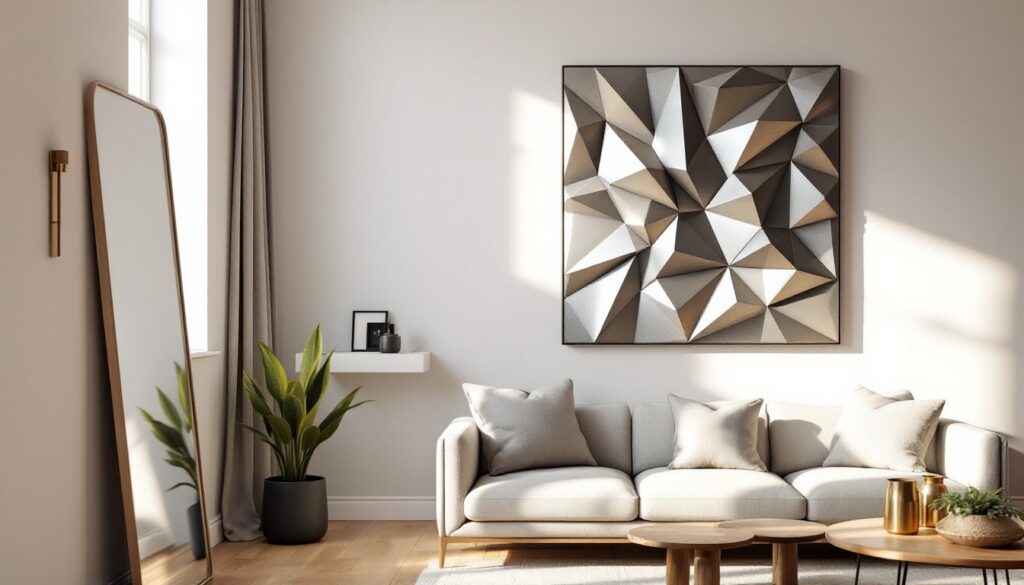
Three-dimensional metal sculptures add shadow play throughout the day as light angles shift. These pieces often mount on French cleats, a two-part hanging system with interlocking beveled edges that distributes weight evenly and allows for minor adjustments. Cut a cleat from ¾” plywood, rip it at a 45° angle on a table saw, and screw one half to the wall studs and the other to the artwork backing.
For renters or those avoiding wall damage, leaning oversized metal panels against the wall works if the piece is stable and the floor surface prevents sliding. Adding small rubber furniture pads to the bottom corners protects baseboards and keeps the art in place.
When selecting metal art, consider the manufacturing process. Laser-cut pieces have crisp, clean edges suited to modern interiors. Hand-hammered or welded sculptures bring an artisan quality that contemporary design enthusiasts often seek for statement walls. Powder-coated finishes add color options while maintaining the metallic sheen.
How to Choose the Right Silver Wall Decor for Your Space
Scale matters more than most homeowners anticipate. A common mistake is choosing art that’s too small for the wall, aim for pieces that fill at least two-thirds of the available width. For a 96″ wide wall, a 60″–72″ piece (or a gallery arrangement within those dimensions) looks intentional. Anything under 40″ will float awkwardly unless it’s part of a curated vignette.
Assess the room’s existing metal finishes before committing. If door hardware, light fixtures, and plumbing are oil-rubbed bronze or antique brass, a high-polish chrome wall sculpture might clash. Instead, opt for antiqued silver or pewter finishes that share the same patina depth. Mixing metals works when finishes share either warmth level or sheen, matte silver pairs with matte black, polished silver with polished nickel.
Consider wall composition and load-bearing capacity. Drywall alone supports roughly 10 lbs per square foot with the right anchors, but heavier metal art (20+ lbs) needs stud backing. For plaster walls common in pre-1950s homes, use toggle bolts or molly bolts rated for the combined weight of the piece plus a 50% safety margin. Brick or concrete walls require masonry anchors and a hammer drill with a carbide bit.
In rooms with bold paint or busy wallpaper, simpler silver pieces prevent visual overload. A single hammered disc or a minimalist line drawing in silver wire reads clearly against patterned backgrounds. Conversely, neutral walls (grays, taupes, whites) can handle intricate metalwork or layered dimensional pieces that create their own focal point.
Think about maintenance access. Silver decor above a fireplace mantel or behind furniture should be reachable without moving heavy items. Polished silver needs occasional buffing with a microfiber cloth and a non-abrasive metal polish: brushed or matte finishes hide smudges but can collect dust in textured surfaces. A soft-bristle vacuum attachment works well for intricate metalwork.
DIY Silver Wall Decor Projects You Can Try Today
One approachable project is a framed sheet metal panel. Purchase a 24″ × 36″ aluminum or galvanized steel sheet from a hardware store (around $15–$25), then frame it with a simple wood frame built from 1″ × 2″ poplar mitered at the corners. The metal reflects light, and the frame adds warmth. Use metal shears or a jigsaw with a metal-cutting blade to trim the sheet if needed. Wear work gloves and safety glasses, cut edges are sharp and can throw sparks.
Another option: spray-paint thrift store mirrors or frames with metallic silver spray paint. Clean the surface with denatured alcohol, apply a bonding primer if painting over glass or glossy finishes, then spray 2–3 light coats of silver. Brands like Rust-Oleum offer chrome-look finishes that deliver a convincing metallic sheen. Work in a well-ventilated space and wear a respirator mask, spray paint fumes contain VOCs.
For those comfortable with power tools, build a geometric wall sculpture from ¾” plywood and cover it with aluminum foil tape (HVAC tape, not kitchen foil). Cut shapes, hexagons, triangles, or abstract forms, with a jigsaw, sand edges smooth, then apply the tape in overlapping strips. The result mimics hammered metal at a fraction of the cost. Mount pieces with a French cleat system for easy repositioning.
A simple upgrade for existing art: replace plain matting with silver metallic matboard. Custom framing shops stock these, or order online and cut to size with a mat cutter and straightedge. The reflective border draws the eye inward and lifts the artwork without competing for attention.
Safety note: When cutting metal or using spray finishes, always work outdoors or in a garage with open doors. Keep a fire extinguisher nearby if grinding or cutting galvanized metal, which can produce flammable dust.
Styling Tips: Pairing Silver Decor with Different Color Schemes
Silver cools down warm palettes. In a room dominated by terracotta, rust, or burnt orange, silver wall art provides visual relief and prevents the space from feeling too saturated. A brushed metal mirror above a terra-cotta-tiled fireplace, for example, balances the earthy warmth with a crisp, reflective surface.
With cool tones, navy, slate, charcoal, silver amplifies the modern, sophisticated vibe. Pairing a polished silver sculpture with deep blue walls creates a monochromatic effect that feels intentional rather than flat. Add warm wood furniture or brass accents to keep the room from reading too cold.
Neutral schemes (grays, beiges, whites) benefit from the texture silver introduces. A flat beige wall stays flat: add a three-dimensional silver panel, and the interplay of light and shadow brings the wall to life. In Scandinavian-inspired spaces, matte silver complements light woods and linen fabrics without the flashiness of gold.
For bold, jewel-toned rooms, emerald, sapphire, amethyst, silver acts as a buffer. It separates saturated color blocks and gives the eye a resting point. A silver-framed gallery wall between a teal accent wall and a plum sofa anchors the transition.
When working with mixed metallics, the 60-30-10 rule applies: 60% one dominant metal, 30% a secondary metal, and 10% accent. If silver is the dominant finish, limit gold or copper accents to smaller decor items, candle holders, picture frames, or hardware. This prevents the space from looking like a jewelry box exploded.
Layering is key. Don’t rely on a single silver piece to carry the room. Echo the metallic in at least two other elements, a lamp base, drawer pulls, or a side table frame. Repetition creates cohesion, signaling that the silver was a deliberate choice rather than an afterthought.
Practical tip: Use dimmers on light fixtures in rooms with reflective silver decor. Adjustable lighting prevents glare and lets homeowners control how much sparkle the space has at different times of day.