
Table of Contents
ToggleSearching for “home theater installation near me” often feels like trying to find a needle in a haystack, there are plenty of listings, but which installer actually knows the difference between Dolby Atmos overhead channels and basic surround sound? A professional home theater installation involves routing cables through walls, calibrating audio for room acoustics, mounting projectors or flat-screens at precise heights, and integrating smart home controls. One wrong junction box placement or a miscalculated viewing angle, and the experience suffers. This guide walks homeowners through what to look for in qualified home theater installers, where to find reliable services locally, what questions to ask before signing a contract, and when hiring a pro makes more sense than going the DIY route.
Key Takeaways
- CEDIA certification and verified experience with your specific equipment are essential when selecting a professional home theater installation provider near you.
- Home theater installation costs range from $200–$500 for basic TV mounting to $10,000+ for high-end Atmos systems with acoustic treatments and smart home integration.
- Always request itemized quotes, insurance proof, and at least one-year labor warranties before hiring an installer, and ask how they handle unexpected obstacles like structural blocks or outdated electrical.
- Professional installation makes sense for complex systems involving in-wall wiring, Dolby Atmos placement, multi-zone audio, or smart home integration—tasks that DIY often fails at due to technical complexity.
- Google Maps, Angi, Yelp, and local AV retailer referrals are reliable channels to find screened home theater installers with verified reviews and background checks in your area.
- Getting references from similar past projects and understanding warranty coverage in writing protects you from costly mistakes and ensures post-installation support.
What to Look for in a Professional Home Theater Installer
Not all home theater installers are created equal. Some specialize in basic TV mounts and soundbars: others design multi-room audio systems with in-wall wiring and integrated lighting control. Here’s what separates a qualified installer from someone who just hangs a screen and calls it a day.
Licensing and certifications matter. Look for installers with CEDIA (Custom Electronic Design & Installation Association) certification, it’s the industry standard for residential AV work. A CEDIA-certified installer has demonstrated knowledge in system design, acoustics, and integration. Depending on your jurisdiction, electrical work tied to home theater installation may require a licensed electrician, especially if running new circuits for amplifiers or dedicated 20-amp lines for equipment racks.
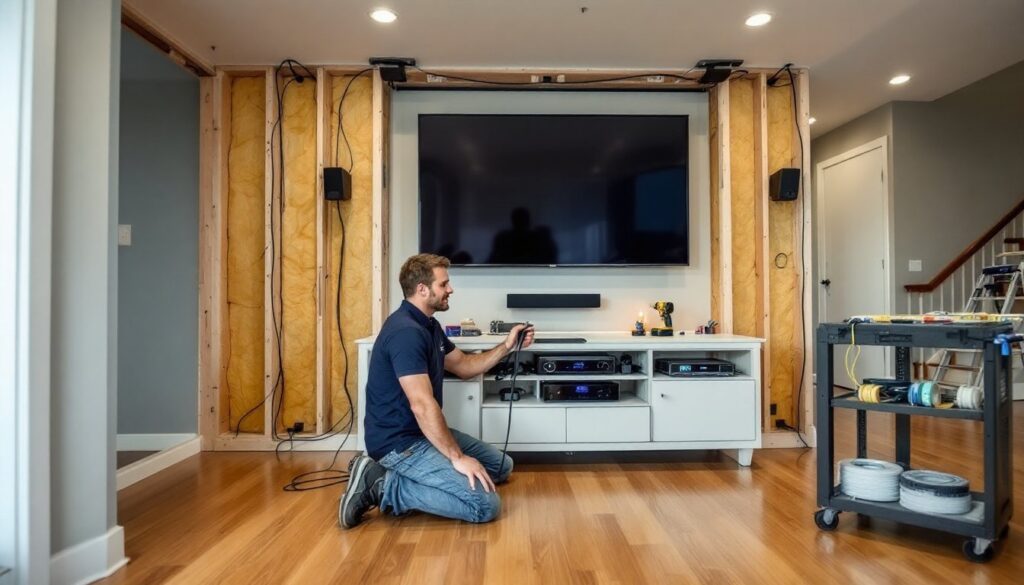
Experience with your specific equipment type is crucial. If you’re installing a 4K laser projector with a motorized screen and Atmos sound, ask how many similar systems the installer has deployed. Request photos of completed projects, wiring should be clean, cables labeled, and rack-mounted gear organized, not a rat’s nest behind the console.
Insurance coverage protects both parties. Professional home theater companies carry general liability and workers’ compensation insurance. If an installer accidentally punches through a water line while fishing cables or damages drywall, you want coverage. Ask for proof of insurance before work begins.
Warranties on labor separate pros from hobbyists. Reputable home theater system installers offer at least a one-year labor warranty covering installation defects, loose connections, improperly calibrated speakers, or failed wire pulls. Equipment warranties are separate and typically handled by manufacturers, but installers should clearly explain what’s covered and for how long.
How to Find Qualified Home Theater Installation Services Locally
Finding the right home theater installer near you requires more than a quick online search. Here are the most reliable channels for locating qualified professionals.
Online Directories and Review Platforms
Google Maps is the obvious starting point, search “home theater installers near me” and filter by ratings above 4.5 stars and at least 20+ reviews. Read past the five-star praise: look for details about timeliness, cleanup, problem-solving when obstacles arose (like unexpected blocking in walls), and post-installation support.
Specialized platforms like Angi connect homeowners with screened home theater installation pros in their area, complete with verified reviews and project cost breakdowns. These platforms often include background checks and licensing verification, saving legwork.
Yelp and Better Business Bureau (BBB) listings provide additional review layers. Pay attention to how companies respond to negative reviews, do they offer solutions, or get defensive? A professional installer acknowledges mistakes and explains remediation steps.
Houzz works well for design-focused projects. If you’re integrating a home theater into a finished basement or media room renovation, Houzz portfolios show completed spaces with design details, helping gauge aesthetic fit alongside technical capability.
Referrals from Specialty Retailers and Audio-Visual Stores
High-end AV retailers often maintain installer networks. Stores selling brands like Sonos, Klipsch, or Sony projectors typically recommend certified installers familiar with their product lines. These referrals carry weight, retailers protect their reputations by vetting who they recommend.
Home theater showrooms let you see systems in action before hiring. Many showrooms offer installation services or partner with local home theater installation companies. Walking through a demo room gives context for questions: “Can you replicate this Atmos ceiling speaker layout in my space?” or “How would you handle cable routing in a room with concrete walls?”
Local home improvement platforms like HomeAdvisor and ImproveNet offer contractor matching based on project scope and location. These services provide cost estimates and connect homeowners with multiple home theater services for comparison quotes.
Questions to Ask Before Hiring a Home Theater Installer
Before signing a contract, a phone call or site visit should answer these critical questions. Vague answers or reluctance to provide specifics are red flags.
“What’s included in your installation quote?” Itemized quotes prevent surprises. Does the price cover cable runs, wall patching, equipment calibration, and mounting hardware? Or just labor for hooking up gear you’ve already unboxed? Some installers charge separately for in-wall wiring versus surface-mounted conduit. Clarify what “turnkey installation” actually means.
“How do you handle obstacles during installation?” Every project hits snags, steel beams blocking wire paths, HVAC ducts where speakers were planned, or outdated electrical that can’t support the load. Ask how they problem-solve and whether change orders trigger additional fees. A pro should offer alternatives (rerouting cables through attic space, using wireless rear speakers) rather than shrugging.
“Can you provide references from recent projects similar to mine?” Request contact info for two or three clients with comparable setups. A 7.1.4 Atmos system in a dedicated theater room differs vastly from a soundbar install. Speaking with past clients reveals how the installer communicates, meets deadlines, and handles post-installation tweaks.
“What brands and equipment do you recommend, and why?” Beware installers pushing a single brand without explaining trade-offs. A good installer discusses options across price tiers, Denon vs. Marantz receivers, KEF vs. Klipsch speakers, and matches recommendations to room size, acoustics, and budget. If they only install what they sell, ask whether pricing is competitive with retail.
“Do you handle permits and inspections?” If installation involves running new electrical circuits, NEC-compliant wiring, or structural modifications (like cutting joists for recessed equipment), permits may be required. Professional home theater system installation services should know local code requirements and either pull permits themselves or advise homeowners on the process.
“What does your warranty cover?” Get it in writing. Does the warranty include return visits for calibration adjustments? What happens if a cable connection fails six months post-install? Understand the difference between installer labor warranty and manufacturer equipment warranty.
Understanding Home Theater Installation Costs and Pricing
Home theater installation costs vary widely based on system complexity, room layout, and regional labor rates. Here’s what drives pricing and what homeowners should budget for.
Basic installations, mounting a TV, connecting a soundbar, and hooking up a streaming device, typically run $200–$500. These jobs take a few hours and involve minimal wiring. Expect the lower end if you’re providing all equipment and the installer is simply mounting and connecting.
Mid-tier systems with 5.1 or 7.1 surround sound, in-wall speaker wiring, AV receiver setup, and cable management cost $1,500–$4,000 installed. This range includes running speaker wire through walls or attic spaces, mounting in-ceiling or in-wall speakers, calibrating audio with the receiver’s room correction (like Audyssey or Dirac Live), and integrating a universal remote or smart home control.
High-end dedicated theaters with Dolby Atmos, acoustic treatments (bass traps, diffusers), projection systems, motorized screens, tiered seating, and smart lighting control range from $10,000 to $50,000+ for installation alone, not including equipment. These projects involve detailed design work, custom cabinetry for equipment racks, soundproofing (adding mass-loaded vinyl to walls, decoupling drywall from studs), and multi-zone audio distribution.
Hourly rates for experienced home theater installers typically fall between $75 and $150 per hour, depending on region and expertise level. Flat-rate project quotes are more common than hourly billing for predictable scope.
Additional cost factors include:
- Concealed wiring: Running cables through finished walls costs more than surface conduit.
- Equipment rack assembly: Custom racks with cooling fans and cable management add labor.
- Calibration time: Professional acoustic calibration using measurement mics and software takes hours.
- Smart home integration: Tying the theater into Control4, Crestron, or Savant systems requires programming time.
Regional variance is significant. Labor and permit costs differ between jurisdictions, and material availability affects pricing. Always get three written quotes with itemized breakdowns before committing. A suspiciously low bid may cut corners on wire quality (using CL2-rated cable instead of CL3 for in-wall runs) or skip calibration steps.
DIY vs. Professional Installation: Making the Right Choice
Some homeowners have the skills and tools to handle basic home theater setup: others are better off hiring pros. Here’s how to decide.
DIY makes sense if:
- The system is basic, a soundbar or bookshelf speakers that don’t require in-wall wiring.
- You’re comfortable drilling into studs, using a stud finder, and mounting hardware safely (a 55-inch TV weighs 40–50 lbs: improper mounting can mean disaster).
- The room has accessible attic or basement space for running cables without opening walls.
- You own or can rent necessary tools: drill/driver, fish tape for pulling cables, wire strippers, stud finder, torpedo level, and crimping tools if terminating speaker wire.
- You have time to research AV receiver settings, speaker placement guidelines (Dolby and THX recommend specific angles and distances), and calibration procedures.
Hire a professional if:
- The system requires in-wall or in-ceiling installation. Cutting drywall, fishing cables through fire blocking, and patching/painting afterwards is time-consuming and easy to botch.
- Dolby Atmos or advanced formats are involved. Proper Atmos requires overhead speakers positioned within tight tolerances, miscalculating placement wastes expensive speakers.
- You’re integrating multi-zone audio or smart home controls. Programming networked systems and ensuring compatibility across devices requires specialized knowledge.
- Electrical work is needed, running dedicated circuits, installing new outlets behind wall-mounted TVs, or wiring subwoofer outlets. This often requires a licensed electrician per local code.
- You lack confidence in acoustic calibration. Room correction software helps, but mic placement and interpreting frequency response graphs isn’t intuitive.
- The project involves structural modifications, cutting joists, adding blocking for heavy equipment, or soundproofing that affects load-bearing walls. This crosses into territory requiring permits and engineering.
Hybrid approaches work too. Some homeowners buy equipment themselves (often cheaper than installer markup), then hire home theater services for the physical installation and calibration. This saves money while ensuring professional-quality work on the tricky parts.
Time and frustration matter. A professional home theater installer completes in a day what might take a DIYer a full weekend, or longer if problems arise. Factor in the value of your time and the cost of potential mistakes (damaged drywall, incorrect wire gauge causing voltage drop, speakers that hum from ground loops). If the project feels over your head, it probably is. There’s no shame in hiring expertise for a system you’ll use for years.