
Table of Contents
ToggleTransforming a bedroom into a Western-style retreat doesn’t require buying a ranch or tearing down walls. With the right materials, textures, and color choices, anyone can recreate the rugged charm of the American frontier inside a standard bedroom. This style blends natural elements, functional furniture, and a few carefully chosen accents to evoke the spirit of wide-open spaces and cowboy culture. The key is balancing authenticity with livability, Western decor should feel grounded and intentional, not like a theme park. Here’s how to get it right.
Key Takeaways
- Western bedroom decor balances natural materials like reclaimed wood, leather, and wrought iron with warm, earthy colors such as tan, burnt orange, and turquoise to create an authentic frontier aesthetic.
- Furniture and bedding should prioritize sturdy, unfussy pieces—log bed frames, simple platform beds, wool blankets, and handcrafted accents—that reflect ranch house functionality rather than decorative excess.
- DIY projects like reclaimed wood accent walls, rope curtain tiebacks, and branded wood signs are cost-effective ways to add Western character while maintaining the resourceful spirit of frontier design.
- Authentic Western bedroom decor avoids kitsch by using ethically sourced vintage pieces, quality materials with visible grain and patina, and meaningful accessories that earn their place in the room.
- Lighting fixtures in wrought iron or Edison-bulb styles, combined with layered textiles and Navajo-inspired rugs, establish the warm, cabin-like ambiance essential to Western bedroom design.
What Defines Western Bedroom Decor?
Western bedroom decor draws inspiration from ranch life, frontier homesteading, and Southwestern landscapes. It’s not a single monolithic style, there’s room for rustic lodge vibes, Texas ranch aesthetics, and Navajo-inspired patterns, but a few core principles tie it all together.
First, natural materials dominate. Think reclaimed wood, leather, wrought iron, and stone. Synthetic finishes and shiny chrome have no place here. Second, the color palette skews warm and earthy: tans, browns, burnt oranges, deep reds, and turquoise accents. Third, the decor nods to Western iconography, cowhide, horseshoes, vintage saddles, and Native American-inspired textiles, without tipping into kitsch.
The goal is to create a space that feels rugged but comfortable, like a bunkhouse upgraded for modern living. It’s functional and unpretentious. If a piece of furniture or decor looks like it could survive a dust storm, it probably fits.
Essential Elements of Western Bedroom Design
Building a Western bedroom starts with choosing materials and textures that ground the space in nature. Skip the sleek veneers and laminate. Instead, look for finishes with character, knots, grain variations, and weathered edges.
Natural Materials and Textures
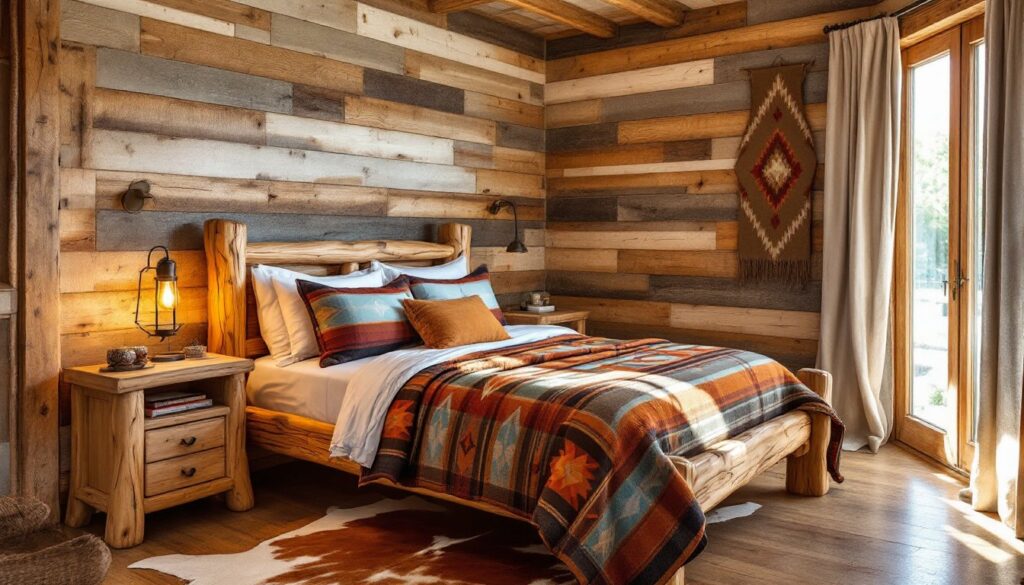
Wood is the foundation. Reclaimed barn wood, rough-sawn pine, or cedar beams add instant authenticity. For accent walls, consider tongue-and-groove pine planks (actual dimensions: 3/4″ x 5-1/2″ for nominal 1×6 boards). Install them horizontally or in a herringbone pattern for visual interest. If a full wood wall isn’t in the budget, peel-and-stick wood planks offer a faster, renter-friendly alternative, though they lack the depth of real lumber.
Leather and hide bring texture. A cowhide rug anchors the room and adds pattern without feeling fussy. Leather headboards, ottomans, or even a simple leather throw pillow introduce warmth. Look for full-grain leather when possible, it ages better and develops a patina over time.
Textiles should feel substantial. Wool blankets, Navajo-style woven rugs, and linen or burlap curtains add layers of texture. Avoid anything too delicate or shiny. The fabrics should feel like they belong in a high-desert cabin, not a French chateau.
Metal accents in wrought iron or oil-rubbed bronze reinforce the rustic vibe. Drawer pulls, curtain rods, and light fixtures in these finishes tie the room together. Steer clear of polished nickel or brass, they’re too refined for this style.
Choosing the Right Color Palette
Western color schemes pull directly from the landscape: canyon walls, sagebrush, leather saddles, and desert sunsets. The palette should feel warm and grounded, never cool or sterile.
Start with a neutral base. Walls in warm beige, tan, or soft gray set the stage without competing for attention. Benjamin Moore’s “Sandy Brown” or Sherwin-Williams’ “Accessible Beige” both work well. For a bolder move, try a deep terracotta or burnt sienna on a single accent wall. One gallon of paint typically covers 350-400 square feet with one coat, so a standard 12′ x 14′ bedroom (roughly 400 sq ft of wall space accounting for openings) needs about 2 gallons for two coats.
Layer in accent colors through textiles and decor. Turquoise, rust red, mustard yellow, and deep brown add visual interest without overwhelming the space. These tones pair well with modern home decor styles that incorporate Southwestern influences.
Wood tones should vary but stay warm. Mix lighter pine with darker walnut or reclaimed barnwood for depth. Avoid overly orange or red-toned stains, they can read more “1990s cabin” than authentic Western.
Keep trim and ceiling paint simple. Off-white or cream works better than stark white, which can feel too contemporary. The goal is cohesion, not contrast.
Western-Inspired Furniture and Bedding
Furniture in a Western bedroom should look sturdy and unfussy. Ornate carvings and delicate legs don’t fit, think ranch house, not Victorian parlor.
For the bed frame, opt for heavy timber construction or wrought iron. A log bed frame made from pine or cedar logs (typically 4″-6″ diameter) makes a strong visual statement. Alternatively, a simple platform bed built from 2×6 or 2×8 dimensional lumber and stained dark walnut keeps things grounded. If going the metal route, look for iron frames with simple geometric patterns, nothing too scrolled or decorative.
Nightstands and dressers should have a handmade or rustic feel. Furniture with visible joinery, like mortise-and-tenon or dovetail joints, adds authenticity. Reclaimed wood pieces or unfinished pine furniture that can be stained on-site work well. Avoid anything with high-gloss finishes or modern hardware.
Bedding plays a big role in setting the tone. Start with a quilted coverlet or Pendleton-style wool blanket. These add pattern and color while reinforcing the Western theme. Layer in linen or cotton sheets in neutral tones. Skip anything overly floral or pastel.
A leather headboard or upholstered piece in a rough linen fabric adds texture behind the bed. For a DIY approach, mount a section of reclaimed barn wood or a vintage barn door as a headboard. Secure it to wall studs (typically 16″ on center) with heavy-duty lag bolts.
Decorative Accents That Capture the Wild West
Accents distinguish a Western bedroom from generic rustic decor. The right pieces add personality without cluttering the space.
Wall art should feel authentic. Vintage rodeo posters, framed Western landscape photography, or mounted antler sets all work. Avoid mass-produced prints that look too polished. If going with antlers, ensure they’re ethically sourced (naturally shed or vintage). Mount them securely to wall studs, antlers can weigh 10-15 pounds per set.
Lighting sets the mood. Wrought iron chandeliers, Edison-bulb fixtures, or lantern-style sconces add ambiance. For a DIY option, convert an old kerosene lantern into a table lamp by wiring it with a simple socket kit (available at most hardware stores). Always follow NEC guidelines when modifying electrical fixtures, and if hardwiring ceiling lights, hire a licensed electrician unless you’re confident working with junction boxes and circuit breakers.
Textiles and rugs layer in warmth. A Navajo-inspired wool rug or cowhide adds pattern underfoot. Hang a vintage saddle blanket on the wall as art or drape it over a bench at the foot of the bed. These touches mirror design ideas found in regional home styles that emphasize heritage and craft.
Accessories should be functional or meaningful. A wooden toolbox repurposed as a nightstand, a vintage rope displayed on a hook, or a stack of worn leather-bound books all contribute to the theme without feeling forced. Avoid tchotchkes, every piece should earn its place.
DIY Western Decor Projects for Your Bedroom
Several Western decor elements are well within reach for a weekend DIYer. Here are a few projects that add impact without requiring advanced skills.
Reclaimed Wood Accent Wall: Source reclaimed barn wood from salvage yards or online marketplaces. Cut boards to length with a miter saw (a circular saw works, but a miter saw gives cleaner cuts). Sand lightly with 120-grit sandpaper to remove splinters but preserve character. Attach boards directly to drywall with a finish nailer and 2″ brad nails, hitting studs where possible. For a floating look, use construction adhesive. Apply a clear matte polyurethane to protect the wood without adding shine.
DIY Rope Curtain Tiebacks: Purchase 1/2″ natural manila rope from a hardware store. Cut two 36″ lengths. Tie a simple loop knot at each end, leaving about 3″ of tail. Install small iron hooks on either side of the window frame, screwing into the window casing or wall stud. Loop the rope around gathered curtains and hang on the hooks. Wear gloves when handling rope, manila fibers can splinter.
Branded Wood Sign: Use a wood-burning tool to create custom signage on a pine plank. Sand the board smooth with 220-grit sandpaper, then sketch your design lightly in pencil. Trace over it with the wood burner, working in a well-ventilated area and wearing a dust mask, burning wood releases fumes. Finish with a coat of tung oil or linseed oil to darken the wood and protect the surface.
Horseshoe Coat Rack: Collect 4-6 horseshoes (new or vintage). Weld or bolt them to a length of reclaimed wood, spaced evenly. If welding isn’t an option, predrill holes in the wood and secure horseshoes with carriage bolts and washers. Mount the finished rack to wall studs with 3″ wood screws. This project requires a drill, wrench set, and basic carpentry skills.
These projects bring character to the space while keeping costs reasonable. Many also make use of materials that might otherwise end up in a landfill, which aligns with the resourceful spirit of Western living.