
Table of Contents
ToggleTarget has become a surprising powerhouse for home decor, offering wall art and decorative pieces that rival specialty stores, at a fraction of the price. Whether someone’s furnishing their first apartment or refreshing a tired living room, Target’s decor aisles deliver style without the sticker shock. The retailer’s rotating collections keep pace with design trends while maintaining accessibility for DIYers on a budget. This guide breaks down what makes Target wall decor worth the trip, which styles are trending in 2026, and how to hang and arrange pieces for maximum impact.
Key Takeaways
- Target wall decor offers designer-inspired aesthetics at a fraction of boutique prices, with most framed and canvas pieces ranging from $15–$80, making it ideal for budget-conscious decorators.
- Two dominant design trends lead Target’s 2026 collections: modern minimalist pieces with clean lines and neutral palettes, and bohemian-eclectic wall art featuring bold colors and textural variety.
- Proper measurements and placement are critical—aim to fill two-thirds to three-quarters of your wall width and position artwork with its center 57–60 inches from the floor for professional results.
- Gallery wall layouts require planning on the floor first, using kraft paper templates to mark nail holes and avoiding the trial-and-error approach that leads to wall damage.
- Target’s 90-day return policy and same-day pickup options eliminate the risk of online ordering, allowing you to see print quality and color accuracy in-store before committing.
Why Target Is a Go-To Destination for Affordable Wall Decor
Target’s wall decor selection hits a sweet spot that many retailers miss: designer-inspired aesthetics at mass-market prices. The company partners with emerging artists and established design studios to produce exclusive collections that rotate seasonally, meaning the selection stays fresh.
Price transparency is another advantage. Most framed prints and canvas pieces fall between $15 and $80, with larger statement pieces topping out around $150. That’s significantly less than boutique galleries or specialty home stores, where comparable pieces easily run $200-$500.
The quality-to-cost ratio holds up for renters and homeowners alike. Frames use actual glass (not acrylic) in many mid-range options, and canvas wraps feature gallery-style stretching over 1.5-inch depth wooden frames. These aren’t heirloom pieces, but they’ll last through several room refreshes.
Target also offers a practical advantage: same-day pickup or delivery. Unlike online-only retailers, shoppers can see wall decor in person before committing, checking print quality and color accuracy under store lighting. This eliminates the guesswork that comes with ordering art sight unseen.
The retailer’s flexible return policy (90 days for most items with a receipt) takes the risk out of experimenting with bold patterns or unfamiliar color palettes. If a geometric print clashes with existing furniture, it goes back without drama.
Popular Target Wall Decor Styles and Trends
Target’s 2026 collections reflect broader shifts in residential design, with two dominant aesthetics leading the pack.
Modern Minimalist and Scandinavian-Inspired Pieces
Clean lines and neutral palettes dominate this category. Think line drawings in black ink on white backgrounds, abstract shapes in muted earth tones, and oversized typography prints. These pieces work particularly well in smaller rooms where busy patterns would overwhelm the space.
Material choices lean toward natural wood frames (light oak and walnut finishes), thin black metal frames, and frameless canvas wraps. The Scandinavian influence shows up in nature-inspired subjects: botanical prints, coastal landscapes, and textural photography of linen or stone.
Size matters here. Many designers now recommend going larger than feels instinctive, a 24×36-inch print often looks more intentional than a cluster of smaller frames. Target’s Project 62 and Threshold lines carry oversized options that maintain the minimalist aesthetic without requiring gallery-wall planning.
Color schemes stick to warm neutrals (terracotta, sand, cream) mixed with cooler grays and occasional navy or forest green accents. This palette plays well with the natural materials popular in contemporary furniture, according to modern home decor trends emerging across North America and Europe.
Bohemian and Eclectic Wall Art Collections
On the opposite end of the spectrum, Target’s boho-inspired pieces embrace pattern, texture, and global influences. Macramé wall hangings, woven tapestries, and rattan-framed mirrors bring tactile variety to flat wall surfaces.
Color palettes here skew warmer and bolder: burnt orange, mustard yellow, deep teal, and rust. Mixed-media pieces combining metal, wood, and fabric create visual interest without requiring multiple separate items. The Opalhouse collection focuses heavily on this aesthetic, with pieces that reference Moroccan, Southwestern, and mid-century bohemian design.
Layering is key with eclectic styles. A woven wall hanging might anchor a gallery wall that includes pressed botanicals, vintage-style prints, and small decorative shelves. This approach requires more planning than single-piece minimalism but offers flexibility to incorporate personal finds and DIY elements.
Textural contrast matters as much as color coordination. Pairing a smooth ceramic wall planter with a chunky fiber weaving creates depth, especially when arrangements incorporate varying distances from the wall surface (think 2-4 inches of relief from three-dimensional elements).
How to Choose the Right Wall Decor for Your Room
Selecting wall decor starts with measurements, not aesthetics. Measure the wall space before browsing, width, height, and the distance from eye level (typically 57-60 inches from the floor to the center of the art). This prevents the common mistake of buying pieces too small for the wall.
Consider the room’s function. High-traffic areas like hallways tolerate bold patterns better than bedrooms, where calming visuals support relaxation. Kitchens and dining areas benefit from food-safe, easy-to-clean surfaces if the wall decor will hang near cooking zones.
Existing color schemes guide palette choices, but don’t demand exact matches. Wall art works best when it pulls one or two accent colors from the room while introducing something new. A throw pillow that echoes the art creates intentional cohesion without appearing overly coordinated.
Lighting conditions affect how colors and finishes read. South-facing rooms with abundant natural light can handle darker frames and richer colors, while north-facing spaces benefit from lighter, reflective pieces that bounce available light. Professional interior design resources on decorating with lighting in mind emphasize testing pieces in actual room conditions.
Scale matters more than most DIYers realize. For walls wider than 6 feet, either choose a single large piece (minimum 30 inches wide) or plan a gallery wall with multiple frames. The visual weight should fill roughly two-thirds to three-quarters of the available wall width to avoid the “floating postage stamp” effect.
Frame style should complement existing woodwork and furniture. Modern spaces with clean-lined furniture pair naturally with simple frames in black, white, or natural wood. Traditional rooms with crown molding and raised-panel doors call for more substantial frames with decorative details.
DIY Tips for Styling Target Wall Decor Like a Pro
Hanging wall decor correctly prevents damage and achieves professional-looking results. The right approach depends on wall type and decor weight.
For drywall: Use picture-hanging hooks rated for the artwork’s weight (check the label or weigh it). Most Target frames under 5 pounds work fine with standard plastic hooks and nails. Heavier pieces (5-15 pounds) require wall anchors or hooks that catch the stud behind the drywall. A stud finder ($15-$30 at any hardware store) locates the 16-inch on-center framing typical in residential construction.
For plaster walls: Pre-drill holes with a 1/16-inch bit to prevent cracking, then use threaded drywall anchors designed for plaster. Skip adhesive hooks on plaster, they rarely hold long-term.
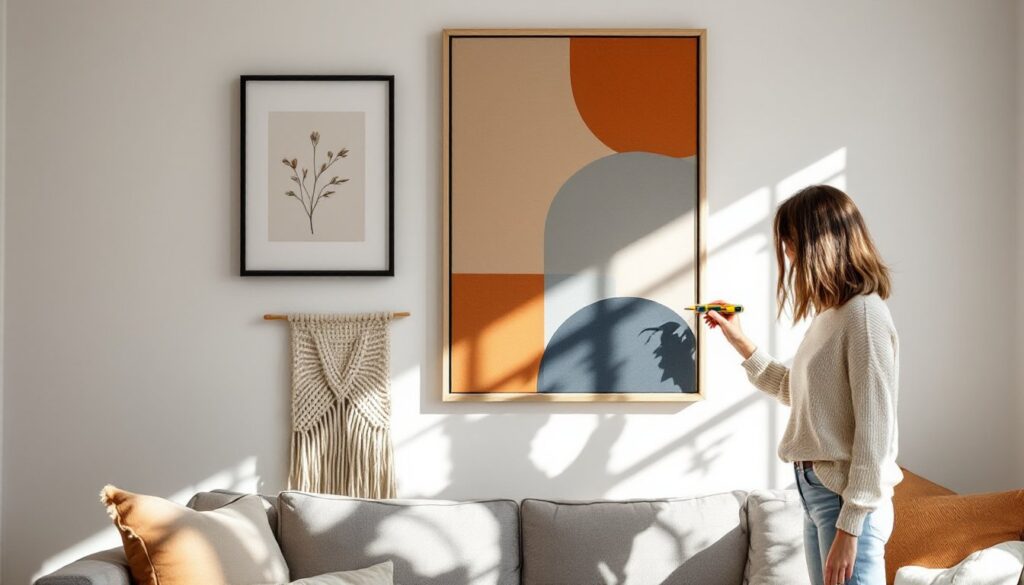
Gallery wall layout requires upfront planning. Arrange pieces on the floor first, maintaining 2-4 inches of space between frames. Trace each frame on kraft paper, tape the templates to the wall, and mark nail holes through the paper. This method prevents the “Swiss cheese wall” that comes from trial-and-error hanging.
Use a level for every piece, even small ones. Nothing signals amateur installation faster than tilted frames. A laser level ($25-$50) speeds up the process for multi-piece arrangements, projecting a straight reference line across the entire wall.
Wired frames hang differently than those with sawtooth hangers. Measure from the top of the frame to the wire when pulled taut, that’s where the hook should sit relative to your desired final position. This prevents the frustration of frames hanging lower than expected.
For renters or those avoiding wall holes, Command picture-hanging strips work for lightweight items (under 3 pounds). Follow the package directions exactly, including the 30-second press and 1-hour wait time before hanging. These strips fail when people rush the adhesive curing process.
Finishing touches make the difference. Step back 8-10 feet after hanging to check alignment and visual balance. Slight adjustments at this stage save major rehang sessions later. Photography showcasing home decor styling techniques demonstrates how proper placement transforms individual pieces into cohesive room design.
Cleaning glass-fronted frames requires only a microfiber cloth and glass cleaner, avoid harsh chemicals that might damage printed mattes. Canvas pieces can be gently dusted with a soft brush attachment on a vacuum set to low suction.
Conclusion
Target wall decor proves that style doesn’t require a designer budget. By understanding current trends, measuring spaces accurately, and using proper hanging techniques, DIYers can achieve gallery-quality results. The key is treating wall decor as an intentional design element, not an afterthought, plan the placement, choose pieces that complement the existing space, and install them with the same care applied to any home improvement project.