
Table of Contents
ToggleNatick homeowners know that a well-planned remodeling project can transform a dated house into a functional, modern living space. Whether it’s an outdated kitchen layout from the ’80s or a cramped bathroom that’s seen better days, the right renovation brings immediate quality-of-life improvements and long-term property value. But remodeling in Massachusetts comes with its own considerations, local building codes, permit requirements, and seasonal weather constraints all play a role. This guide walks through the essential services, contractor selection, and budgeting strategies Natick residents need to know before swinging the first hammer.
Key Takeaways
- Kitchen and bathroom remodeling services in Natick offer strong ROI, with kitchens ranging from $25,000-$100,000+ and bathrooms from $15,000-$35,000 depending on scope and materials.
- Massachusetts requires contractors performing work over $1,000 to hold HIC registration or Construction Supervisor License; always verify credentials and request proof of $1 million liability insurance and workers’ compensation coverage.
- Energy efficiency upgrades like new windows, attic insulation, and Energy Star appliances can reduce heating and cooling costs by 20-30% annually while qualifying for federal tax credits and Mass Save rebates.
- Plan for a realistic timeline of 8-14 weeks for full kitchen remodels and 6-10 weeks for bathrooms, allocating 20% buffer time for permit delays, material backorders, and inspections.
- Set aside 10-15% of your total remodeling budget as a contingency fund to cover unexpected issues like rotted subfloors or outdated wiring that commonly surface during renovation in older homes.
- Get three detailed quotes comparing material quality, warranty terms, and contractor communication before committing; the lowest bid often delivers less value than a mid-range contractor with strong local references.
Why Natick Homeowners Are Investing in Remodeling Projects
Natick’s housing stock runs the gamut from mid-century ranches to newer builds, but many homes share common pain points: closed-off floor plans, single-bathroom layouts, and aging mechanical systems. Homeowners are choosing to remodel rather than relocate for several practical reasons.
First, the local real estate market remains competitive. Moving costs, realtor fees, closing costs, and mortgage rate resets, often exceed the investment needed to upgrade a current property. Remodeling lets families stay in established school districts and familiar neighborhoods while addressing functional shortcomings.
Second, energy efficiency upgrades deliver measurable savings. Replacing old windows, adding insulation to attic spaces (R-49 is the current recommendation for Massachusetts), and upgrading to Energy Star-rated appliances can cut heating and cooling costs by 20-30% annually. These improvements also qualify for federal tax credits and state rebates through programs like Mass Save.
Finally, aging-in-place modifications are increasingly common. Widening doorways to 36 inches for wheelchair access, installing zero-threshold showers, and adding grab bars in bathrooms (anchored to blocking in the wall studs, not just drywall) allow homeowners to stay in their homes longer without sacrificing safety or independence.
Most Popular Home Remodeling Services in Natick
Two areas consistently top the remodeling priority list for Natick residents: kitchens and bathrooms. Both deliver strong returns on investment and directly impact daily living.
Kitchen Renovations
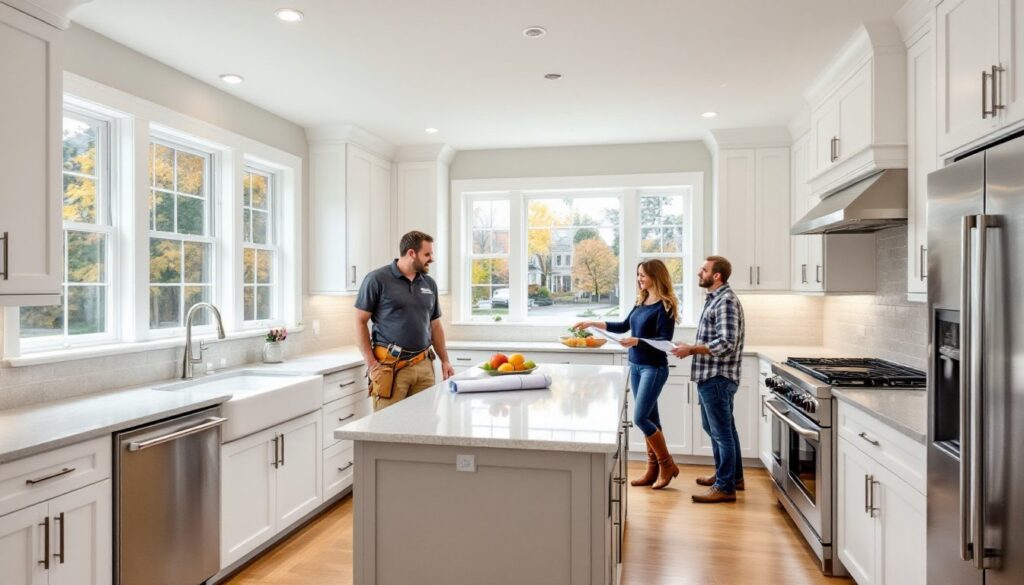
Kitchen remodels range from cosmetic facelifts to full gut jobs. A minor kitchen remodel, new cabinet doors, countertops, and appliances without moving plumbing or gas lines, typically runs $25,000-$40,000 in the Natick area. A major renovation that reconfigures the layout, adds an island, or opens the space to adjacent rooms can reach $60,000-$100,000+.
Key considerations for kitchen projects:
- Countertop materials: Quartz remains popular for durability and low maintenance (no sealing required). Expect to pay $60-$100 per square foot installed. Granite runs slightly less, while premium materials like quartzite or soapstone push higher.
- Cabinetry: Stock cabinets offer the best value, semi-custom allows more configuration options, and custom cabinetry fits unique spaces or high-end design goals. Face-frame construction (standard in American cabinetry) differs from European frameless styles, each has pros and cons for hinge placement and storage access.
- Electrical upgrades: Modern kitchens require dedicated 20-amp circuits for microwaves, dishwashers, and disposal units, plus GFCI protection for countertop outlets per NEC code. Older homes often need panel upgrades to support the added load.
- Ventilation: Range hoods should move at least 100 CFM for electric cooktops, 150+ CFM for gas. Ducted ventilation (vented to exterior) outperforms recirculating models but requires exterior wall or roof penetration.
Many Natick homeowners choose to work with local remodeling specialists who understand Massachusetts building codes and can navigate permit requirements efficiently.
Bathroom Upgrades
Bathroom renovations typically cost $15,000-$35,000 for a full remodel of a standard 5×8-foot space. The tight quarters and concentration of plumbing, electrical, and ventilation systems make bathrooms among the most complex rooms to renovate per square foot.
Common bathroom project elements:
- Shower and tub installations: Fiberglass units offer the most budget-friendly option. Tile showers with waterproof membranes like Schluter Kerdi or RedGard provide custom sizing and design flexibility but require skilled tile-setting to prevent leaks. Walk-in tubs with built-in seats suit aging-in-place goals.
- Vanity sizing: Standard vanity heights increased from 30-32 inches to 34-36 inches (“comfort height”) in recent years. Depth runs 18-21 inches typically. Wall-hung vanities simplify floor cleaning but require blocking in the wall framing during the rough-in stage.
- Flooring: Porcelain or ceramic tile remains the most water-resistant option. Luxury vinyl plank (LVP) offers a wood look with better moisture tolerance than laminate but should be fully adhered, not floating, in wet areas. Natural stone requires regular sealing.
- Ventilation requirements: Massachusetts building code requires bathroom exhaust fans rated for the room’s cubic footage (typically 50-80 CFM for standard baths). Fans should vent to the exterior, never into attic spaces where moisture causes mold and rot.
Platforms like HomeAdvisor provide cost calculators and contractor matching services, though local referrals often yield the most reliable results.
How to Choose the Right Remodeling Contractor in Natick
Selecting a contractor is the most critical decision in any remodeling project. Massachusetts requires contractors performing work over $1,000 to hold either a Home Improvement Contractor (HIC) registration or a Construction Supervisor License (CSL). Verify credentials through the state’s Office of Consumer Affairs and Business Regulation website.
Vetting checklist:
- License and insurance: Confirm active HIC/CSL registration, general liability coverage ($1 million minimum), and workers’ compensation insurance. Request certificates of insurance directly from the carrier.
- Local references: Ask for 3-5 recent projects in the Natick area. Drive by completed work if possible. Online reviews matter, but in-person references reveal more about communication style and problem-solving.
- Detailed estimates: Quality contractors provide line-item breakdowns showing labor, materials, permits, and contingencies separately. Lump-sum bids make it harder to track changes or compare proposals.
- Payment schedules: Typical structures involve 10% down, 30-40% at project milestones (rough-in complete, drywall hung, etc.), and final payment upon completion. Never pay more than one-third upfront. Massachusetts law limits deposits to $1,000 or one-third of contract value, whichever is less.
- Timeline estimates: Realistic contractors account for permit approval (2-4 weeks in Natick), material lead times (cabinets often take 6-8 weeks), and inspection schedules. Be wary of promises that sound too fast.
- Communication preferences: Clarify how change orders are handled, who supervises the daily work, and response time expectations for questions.
For comprehensive home repair and remodeling services, check contractors’ specializations, some focus on kitchens and baths, while others handle structural work, additions, or whole-house renovations.
Design inspiration platforms like Houzz allow homeowners to collect ideas, but remember that photos showcase finished aesthetics, not the structural and code-compliance work that happens behind the walls.
What to Expect: The Remodeling Process from Start to Finish
Understanding the project timeline helps homeowners plan around disruptions and avoid surprises. Here’s the typical sequence for a major kitchen or bathroom remodel in Natick:
1. Design and Planning (2-6 weeks)
Work with the contractor or a designer to finalize layouts, select materials, and create detailed plans. This phase includes measurements, appliance specs, and fixture selections. For projects involving structural changes (removing load-bearing walls, relocating plumbing stacks), a structural engineer may need to provide stamped drawings.
2. Permitting (2-4 weeks)
Natick’s Building Department requires permits for most remodeling work involving plumbing, electrical, structural, or gas line changes. Cosmetic updates like painting or replacing cabinet doors don’t require permits. Submit plans, pay fees (typically $500-$1,500 depending on scope), and wait for approval. Some experienced contractors handle permit applications as part of their service.
3. Demolition and Rough-In (1-2 weeks)
Crew removes old cabinets, fixtures, flooring, and drywall as needed. Plumbers and electricians rough in new lines before walls close up. Inspections occur at this stage, framing, electrical rough-in, and plumbing rough-in each require sign-off before proceeding.
4. Closing Walls and Prep Work (1-2 weeks)
New drywall goes up (typically ½-inch for walls, ⅝-inch for ceilings), gets taped, and receives multiple coats of joint compound. This stage is messy, dust travels through HVAC systems, so seal off work areas with plastic sheeting and consider upgrading your furnace filter.
5. Installation and Finishing (2-4 weeks)
Cabinets, countertops, tile, fixtures, and appliances get installed. Painting happens after cabinets are in but before final hardware. Flooring typically goes in last to avoid damage during other installations.
6. Final Inspection and Walk-Through (1 week)
The building inspector verifies code compliance. The contractor and homeowner do a punch-list walk-through to identify any touch-ups or corrections needed before final payment.
Total timeline for a full kitchen: 8-14 weeks. Bathrooms run slightly faster at 6-10 weeks. Weather delays, material backorders, and inspection scheduling can extend these estimates. Plan for 20% buffer time.
Budgeting for Your Natick Home Remodeling Project
Accurate budgeting prevents mid-project sticker shock. Break costs into these categories:
Materials (40-50% of budget)
Cabinets, countertops, fixtures, tile, flooring, appliances, and finishes. Pricing varies widely by quality tier, a builder-grade vanity runs $300-$600, while a custom piece reaches $2,000-$5,000+. Save samples and model numbers to track selections.
Labor (35-45%)
Demolition, framing, plumbing, electrical, drywall, tile-setting, painting, and finish carpentry. Skilled trades command $75-$125/hour in the Natick area. Complex work like custom tile patterns or coffered ceilings increases labor hours.
Permits and Fees (2-5%)
Building permits, engineering stamps if needed, and utility connection fees. Massachusetts also requires lead paint testing and containment protocols for homes built before 1978, adding $500-$2,000 to renovation costs.
Contingency (10-15%)
Every remodel uncovers surprises, rotted subfloors under old tile, outdated wiring that doesn’t meet code, or plumbing that needs rerouting. Set aside 10-15% of the total budget for unexpected issues. Older homes need the higher end of this range.
Financing options include:
- Home equity lines of credit (HELOC): Variable rates currently around 8-9%, interest may be tax-deductible if used for home improvements.
- Cash-out refinance: Makes sense if current mortgage rates are competitive and you’re refinancing anyway.
- Personal loans: Faster approval but higher interest rates (10-15%+).
- Contractor financing: Some professional remodeling services offer payment plans, but compare rates carefully.
For basement renovations specifically, the top basement remodelers in Natick provide specialized expertise in moisture control, egress windows for code compliance, and foundation-specific challenges.
Get three detailed quotes before committing. The lowest bid isn’t always the best value, compare material quality, warranty terms, and project timelines alongside price. A mid-range contractor who communicates clearly and has local references often delivers better results than a bargain bid from an out-of-area crew.
Remodeling transforms how you live in your home daily. With realistic budgets, vetted contractors, and clear project expectations, Natick homeowners can navigate renovations confidently and avoid the common pitfalls that turn dream projects into cautionary tales.