
Table of Contents
ToggleMinecraft has captivated millions with its blocky worlds and endless creative possibilities, and that same pixelated charm can transform a bedroom into a unique gaming sanctuary. For kids and teens obsessed with mining, crafting, and building, a Minecraft-themed room isn’t just decor: it’s an immersive extension of their favorite game. Parents tackling this project will find that most elements don’t require advanced carpentry skills or a massive budget. With the right mix of DIY touches, strategic purchases, and a little creativity, anyone can craft a blocky, game-inspired space that feels intentional rather than cluttered with licensed merchandise.
Key Takeaways
- Minecraft bedroom decor leverages the game’s clean geometric shapes and core colors—grass green, stone gray, dirt brown, water blue, and lava orange—to create an immersive space without requiring advanced DIY skills.
- Paint and LED lighting deliver the highest visual impact for the lowest cost, with accent walls, canvas art, and strategically placed LED strips transforming a room into a game-inspired sanctuary.
- Modular storage solutions like cube shelving units and labeled bins double as both organization tools and in-game references, reinforcing the blocky aesthetic while teaching kids sorting habits.
- A cohesive Minecraft bedroom design grows with the child—the minimalist, retro-inspired vibe transitions seamlessly from a young kid’s playful space to a teen’s gaming lounge with simple accessory and lighting adjustments.
- Budget-conscious decorating focuses strategic spending on high-impact foundational elements like paint and lighting, then fills remaining space with DIY projects and repurposed furniture rather than spreading resources thin on licensed accessories.
- Removable vinyl decals, printable wall art in inexpensive frames, and fabric paint projects offer flexibility and customization at a fraction of the cost of official licensed merchandise.
Why Minecraft-Themed Bedrooms Are Perfect for Gamers and Kids
Minecraft’s aesthetic translates surprisingly well into real-world design. The game’s clean lines, bold colors, and geometric shapes make it easier to execute than more complex themes like superhero universes or fantasy landscapes. There’s no need to hunt down exact replicas of characters or props, simple cube patterns, earth tones, and green accents immediately evoke the game’s blocky biomes.
The theme also grows with the child. Unlike cartoon-based decor that might feel dated in a year or two, Minecraft’s minimalist, retro-inspired vibe has staying power. A well-executed room can transition from a young kid’s playful space to a teen’s gaming lounge with just a few tweaks to accessories and lighting. The modular nature of the design means parents can start small and add layers over time without needing to repaint or overhaul furniture.
From a practical standpoint, the theme encourages organization and creativity. Storage solutions can double as in-game references, think labeled bins mimicking chests or cube shelving units echoing the block-based terrain. Kids who play Minecraft are already familiar with sorting, building, and designing, so themed storage solutions can reinforce those habits in a tangible way.
Essential Minecraft Decor Elements to Get Started
Before diving into paint and furniture, establish a cohesive color palette. Minecraft’s core hues include grass green, stone gray, dirt brown, water blue, and lava orange. Choose two or three primary colors to anchor the room, then layer in accent tones through accessories. Avoid overwhelming the space with every biome color at once, too many competing shades will feel chaotic rather than themed.
DIY Minecraft Wall Art and Painting Ideas
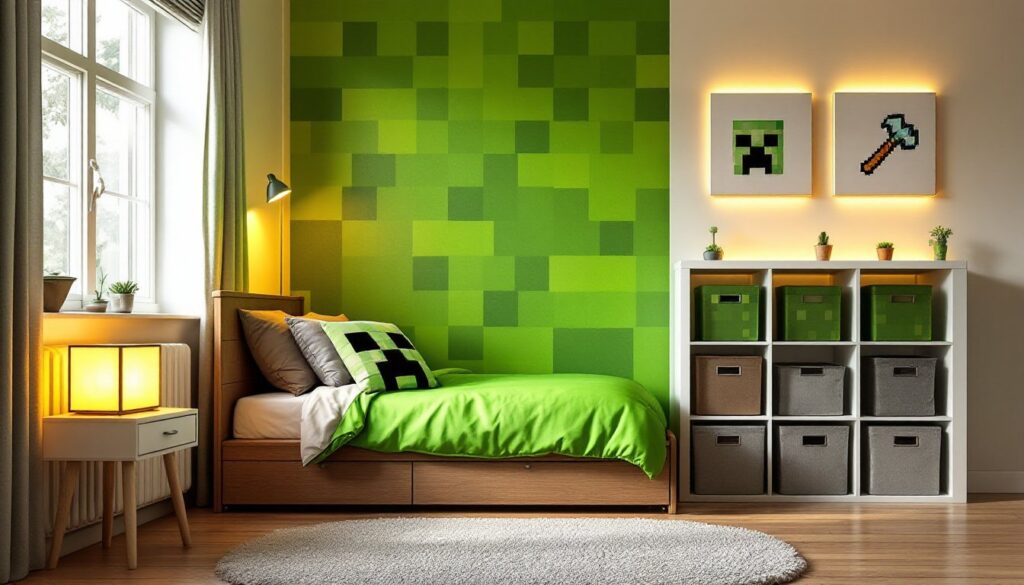
Paint offers the biggest visual impact for the least cost. A simple accent wall painted in green with hand-cut squares of darker green painter’s tape creates instant grass block texture. Leave the tape on after painting for a clean grid effect, or remove it for subtle tonal variation. For a dirt block look, use brown base paint with medium and dark brown squares in a checkerboard pattern.
If full wall painting feels too permanent, removable vinyl wall decals shaped like Creepers, TNT blocks, or diamond swords offer flexibility. Arrange them in clusters rather than scattering randomly, grouping three to five decals on one wall section creates focal points without visual noise.
Canvas art is another approachable DIY route. Purchase blank 12×12-inch canvases and use acrylic paint to recreate pixelated tools, mobs, or blocks. Each pixel translates to roughly a 1-inch square, making it easy to grid out designs with pencil before painting. Hang canvases in a gallery wall arrangement for a custom, gallery-style display that costs a fraction of licensed posters.
Minecraft Bedding, Curtains, and Textile Choices
Bedding sets the tone but doesn’t need to be officially licensed to work. Solid green comforters paired with gray or brown sheets instantly read as Minecraft-inspired. If going the licensed route, look for reversible comforter sets, one side usually features busy all-over prints, while the reverse offers simpler block patterns that feel less juvenile as kids age.
Curtains and throw pillows add layering opportunities. Solid colors work best for curtains to avoid overwhelming the space, but consider adding pillow covers in Creeper faces or block textures. Many are available as affordable print-on-demand options or can be DIYed using fabric paint and stencils on plain pillow covers. Stick to one or two statement pillows rather than covering the bed in themed pieces.
Lighting Ideas to Create the Perfect Minecraft Ambiance
Lighting is where a Minecraft room shifts from ordinary to immersive. The game’s environments rely heavily on torches, glowstone, and redstone lamps, all easily mimicked with practical lighting solutions.
LED strip lights offer the most versatility. Install them along the top edge of walls (crown molding height) or behind furniture for ambient backlighting. Choose warm yellow or orange to mimic torchlight, or use color-changing strips that can shift to red for a Nether vibe or blue for ice biomes. Most LED strips come with adhesive backing and plug into standard outlets, requiring no electrical work.
For task lighting, consider cube-shaped lamps or pendant lights. Several retailers sell modular cube lights that stack or hang, echoing Minecraft’s block aesthetic. Position one on a nightstand or desk for functional lighting that reinforces the theme. Alternatively, wrap plain cube lampshades with printed block textures using adhesive vinyl or fabric.
Night lights shaped like torches or glowstone blocks add subtle illumination and double as decor. Mount torch-style lights on walls flanking the bed or near doorways. Some battery-operated versions include motion sensors, useful for middle-of-the-night navigation without harsh overhead lights.
Avoid overly bright overhead fixtures. Minecraft’s lighting is moody and localized, so consider dimmer switches on ceiling lights or replace standard bulbs with lower-wattage LEDs. Layered lighting, ambient strips, task lamps, and accent night lights, creates depth and mirrors the game’s varied light sources.
Furniture and Storage Solutions for a Blocky Aesthetic
Minecraft’s blocky world makes furniture selection straightforward: prioritize clean lines, cube shapes, and modular pieces. Cube storage units are the most obvious choice. Systems like shelving cubes (typically 13-inch or 15-inch square openings) can be stacked and arranged to mimic terrain or structures. Use fabric bins in themed colors, green for grass, gray for stone, brown for dirt, to organize toys, games, or clothing while maintaining the aesthetic.
For a true DIY approach, build simple cube shelves from 3/4-inch plywood or MDF. A basic 12-inch cube requires six square panels, wood glue, and finishing nails or a brad nailer. Paint each cube before assembly in block-inspired colors, then stack or mount them in asymmetrical arrangements on the wall. This method costs less than prefab systems and allows custom sizing.
Beds can be transformed with platform bed frames that sit low to the ground, emphasizing horizontal blocky proportions. If the existing bed stays, consider a simple headboard DIY: cut a piece of 1/2-inch plywood to fit the bed width, paint it as a grass or stone block, and mount it to the wall behind the bed. No upholstery skills required.
Desks and dressers don’t need to be overtly themed. Choose pieces in natural wood, white, or gray finishes that won’t compete with the room’s colorful accents. Swap out standard drawer pulls for square or cubic knobs, many hardware stores stock simple geometric pulls that subtly reinforce the blocky theme. When choosing furniture styles, simpler modern design approaches often pair better with gaming themes than ornate traditional pieces.
Budget-Friendly Minecraft Bedroom Decor Tips
Minecraft decor can run the gamut from DIY pennies-on-the-dollar projects to high-end custom builds. Staying budget-conscious doesn’t mean sacrificing impact, it just requires strategic choices and a willingness to get hands-on.
Start with paint. A gallon of quality interior latex runs $25–$40 and covers roughly 400 square feet. One gallon can handle an accent wall and multiple canvas projects. Use painter’s tape, which costs $5–$10 per roll, to create crisp block patterns without freehand painting stress. Small sample-size paint jars (about $3 each) work perfectly for detail work on canvases or furniture touch-ups.
Printable wall art drastically undercuts framed posters. Dozens of free or low-cost Minecraft-inspired pixel art files are available online. Print on cardstock at home or use a print shop for larger formats (an 18×24-inch print typically costs $8–$15). Pop prints into inexpensive frames from discount stores, or skip frames entirely and use binder clips on a string for a casual gallery wall.
Repurpose existing furniture rather than replacing it. A dated dresser becomes Minecraft-ready with a fresh coat of gray paint and square drawer pulls ($2–$4 each). Nightstands can be stacked cube storage bins instead of traditional furniture. An old desk gets new life with stick-on vinyl in grass block patterns (sheets run $10–$20 and are repositionable).
Fabric projects stretch budgets further. A yard of solid green fleece ($5–$8) becomes a no-sew throw blanket, just trim edges with pinking shears. Use fabric paint (bottles around $3–$5) and stencils cut from cardstock to add Creeper faces or block textures to plain pillow covers, curtains, or even lampshades. Unlike screen-printed licensed items, DIY fabric projects cost a fraction and can be customized to exact color preferences.
Prioritize DIY where it’s easiest and buy where it’s cheap. Licensed bedding sets go on sale frequently and offer good value compared to custom sewing. Wall decals cost less than hiring a muralist. But painted canvases, cardboard props, and repainted furniture deliver high impact for minimal expense. For parents exploring budget decorating techniques, focusing effort on visible, high-impact areas like walls and lighting pays off more than spreading budget thin across every element.
Avoid the trap of buying every small licensed accessory. A $15 Minecraft lamp adds less value than a $15 can of paint used across multiple projects. Focus the budget on foundational elements, paint, lighting, one or two statement pieces, then fill in with DIY and repurposed items. The room will feel more custom and less like a big-box store display.